Many people want to hang shelves, mirrors, or decor, but they don’t have a drill—or maybe they just don’t want the noise, mess, or hassle. If you’re in this situation, you might think installing drywall anchors is impossible. That’s not true.
With the right method, you can install drywall anchors without a drill and still get strong, safe results. The process is simpler than most expect, and you probably already have most of the tools you need at home.
In this guide, you’ll discover clear, step-by-step instructions to install drywall anchors by hand, learn about the best anchor types for this method, and get tips to avoid common mistakes. Whether you rent, need a quiet solution, or just want a quick fix, you’ll find solutions here.
Let’s get started and make sure your next wall-hanging project goes smoothly—no drill required.
Understanding Drywall Anchors And Their Uses
Before you begin, it helps to know what drywall anchors are and why they matter. Drywall is softer and weaker than wood or concrete. If you screw directly into drywall, the screw may pull out, especially with any weight. Anchors spread the force, making it possible to hang heavy items without damaging the wall.
There are several types:
- Expansion anchors (also called “plastic anchors”)
- Threaded anchors (sometimes called “self-drilling anchors”)
- Toggle bolts and molly bolts
Each type has unique strengths. Most people think you always need a drill, but with the right anchor, you can install by hand, especially in standard 1/2-inch drywall.
Choosing The Right Anchor For No-drill Installation
Your choice of anchor is important. Some require a pilot hole (which usually means a drill), but others are designed for hand installation.
Let’s compare the main types you can use without a drill:
| Anchor Type | Best For | Weight Capacity | Easy to Install Without Drill? |
|---|---|---|---|
| Plastic Expansion Anchor | Light items (clocks, photos) | Up to 15 lbs (6.8 kg) | Yes, with a hammer |
| Threaded Anchor (Self-Drilling) | Medium items (shelves, mirrors) | Up to 50 lbs (22.7 kg) | Yes, use screwdriver |
| Toggle Bolt | Heavy items (TV mounts) | Up to 100 lbs (45.4 kg) | No, needs large hole |
| Molly Bolt | Medium/heavy items | Up to 50 lbs (22.7 kg) | Sometimes, with effort |
Key insight: For no-drill installs, plastic expansion anchors and threaded self-drilling anchors are the best choices. Toggle bolts and molly bolts are strong but usually require a bigger hole than you can make without a drill.
Tools And Materials You’ll Need
You don’t need much to install drywall anchors without a drill. Here’s what you’ll want ready:
- Hammer (for plastic anchors)
- Phillips screwdriver (for threaded anchors)
- Small nail or awl (to make a starter hole)
- Level (to keep items straight)
- Pencil (for marking)
- Measuring tape
If you’re missing a hammer, a heavy object (like a thick book or rubber mallet) works for tapping in plastic anchors.
Step-by-step: Installing Plastic Expansion Anchors Without A Drill
Plastic expansion anchors are the most basic type and often come with lightweight shelving kits. Here’s how to use them with no drill:
1. Mark Your Spot
Measure and use a pencil to mark exactly where you want the anchor. Double-check with a level if you’re hanging something that needs to be straight.
2. Make A Starter Hole
Hold a nail or awl to your mark and tap gently with your hammer. The hole should be just large enough to help the anchor’s tip get started, not the full size of the anchor. This step prevents the drywall from cracking.
Pro tip: Twist the nail in a bit after tapping to widen the opening, especially for thicker drywall.
3. Tap In The Anchor
Line up the tip of the plastic anchor with the starter hole. Tap it gently with your hammer until it is flush with the wall. Don’t hit too hard, or the anchor can bend or break.
4. Insert The Screw
Place the screw into the anchor and use a screwdriver to turn it. The anchor will expand behind the wall, locking in place. Stop when the screw is snug, but don’t overtighten—this can strip the anchor or damage the wall.
5. Hang Your Item
Attach your object (frame, hook, shelf bracket) to the screw. Gently test the strength by pulling downwards.
Common mistake: Pushing the anchor in with just your thumb usually fails and bends the anchor. Always use a hammer.
Step-by-step: Installing Threaded (self-drilling) Anchors Without A Drill
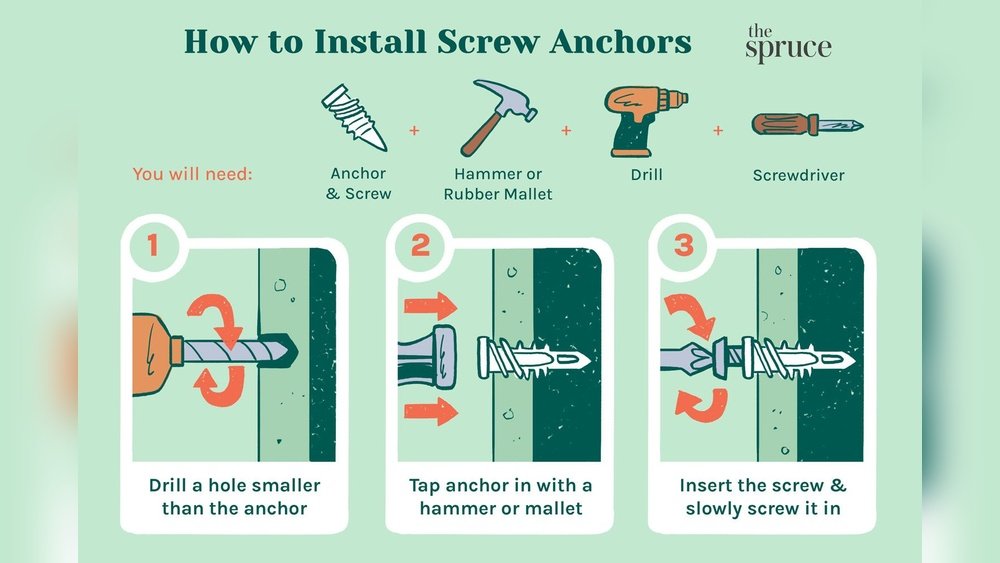
Threaded anchors are designed for no-drill use. Their wide threads cut into drywall as you twist them in.
1. Mark And Start The Hole
As before, mark your spot. Use a nail or awl to make a small dimple where the anchor will go. This helps you start the anchor straight.
2. Drive The Anchor
Place the tip of the anchor on your mark. Using a Phillips screwdriver, begin twisting the anchor into the wall with firm, even pressure. The threads will bite into the drywall. Keep the anchor as straight as possible.
Tip: For hard drywall, you may need to push firmly at the start, but don’t try to hammer these in—they’re designed for twisting.
3. Insert The Screw
Once the anchor is flush with the wall, insert the provided screw into the anchor. Tighten until it holds firmly.
4. Attach Your Object
Hang your item as needed. These anchors can hold more weight than plastic expansion types, but always check the package for the exact weight rating.
Non-obvious insight: When using a screwdriver for self-drilling anchors, a stubby screwdriver gives better control in tight spaces.
Comparing No-drill Anchor Types
Let’s look at how plastic expansion and threaded anchors compare for key factors:
| Feature | Plastic Expansion | Threaded (Self-Drilling) |
|---|---|---|
| Weight Capacity | Up to 15 lbs | Up to 50 lbs |
| Ease of Installation | Very easy | Easy, needs more force |
| Wall Damage | Minimal | Moderate (bigger hole) |
| Removability | Leaves small hole | Leaves larger hole |
| Best For | Lightweight items | Medium weight items |
Tip: For rented homes, plastic anchors are often preferred. They’re easier to patch if you move out.
Alternatives When You Truly Can’t Use A Drill
Sometimes, you can’t even use a hammer or need to avoid making any hole. Here are a few alternatives:
- Adhesive wall hooks – These use strong glue and work for light items. No hole needed.
- Tension rods – For windows or closets, these use pressure instead of holes.
- Magnetic hooks – If your wall has metal studs, these can work.
But for most shelves, hooks, and decor, a simple anchor (as described above) is stronger and safer.
Tips For A Strong, Safe Installation
Even when you avoid power tools, you can get professional results. Here’s how:
Use The Right Size Anchor
Don’t guess. If you use too small an anchor, it will pull out. Too big, and the wall can crack. The anchor should match the screw and the weight of your item.
Mind The Wall Material
Most drywall is 1/2-inch thick. If your wall is thinner, or covered with tile or paneling, anchors may not work well. Always check by removing a wall plate or looking in a closet.
Avoid Electrical And Plumbing
Never make holes near light switches, outlets, or plumbing. There could be hidden wires or pipes. Stay at least 2 inches (5 cm) away from these areas.
Test Before Hanging
After installing the anchor and screw, give a gentle pull. If it feels loose or moves, remove and try again with a bigger anchor. Don’t risk a heavy item on a weak anchor.
Repair Mistakes Properly
If you make a hole in the wrong place, patch it with spackle and let it dry before trying again. Don’t reuse a damaged anchor.
Real-world Example: Hanging A Shelf Without A Drill
Imagine you want to hang a small shelf in your apartment, but you don’t have a drill. The shelf weighs 8 lbs (3.6 kg), and you want to put books (about 7 lbs/3 kg) on it. Here’s a practical way to do it:
- Choose threaded self-drilling anchors rated for at least 20 lbs each.
- Use a pencil and level to mark the two shelf bracket holes.
- Make a small dimple with a nail.
- Twist in both anchors with a screwdriver.
- Insert the screws, leaving them out just enough for the bracket to fit.
- Hang the shelf and gently add weight.
You’ll find the shelf holds strong—no drill, no problem.
Mistakes People Make (and How To Avoid Them)
Many first-timers end up with loose screws or wall damage. Here are common errors:
- Using the wrong anchor type – Not all anchors work without a drill. Avoid toggle bolts unless you can make a large hole by hand (rarely practical).
- Not making a starter hole – Trying to push or twist an anchor straight into drywall can crack the wall or bend the anchor. Always make a small guide hole.
- Overtightening the screw – When you tighten too much, you can strip the anchor or crush the drywall.
- Ignoring weight limits – Even the best anchor will fail if you overload it. Always check the package for ratings.
- Anchoring too close to corners or edges – Drywall is weaker at edges. Stay at least 2 inches (5 cm) from any corner.
Anchor Removal: Taking Anchors Out Without Damaging The Wall
When you want to move or remove your item, you’ll need to take out the anchor. Here’s how:
- For plastic expansion anchors: Unscrew and remove the screw. Use needle-nose pliers to gently pull the anchor out. If it won’t budge, tap it deeper into the wall and patch over.
- For threaded anchors: Unscrew the screw, then use a screwdriver to back the anchor out, like a big screw. Patch the hole with spackle.
Tip: Always paint over patched holes to match the rest of the wall.
Advanced Option: Making A Pilot Hole Without A Drill
Sometimes, even a small starter hole is hard to make in thick or old drywall. Here are some methods, if you’re careful:
- Use a sturdy nail and twist as you push in, making a wider opening.
- A Phillips screwdriver tip can be pressed and twisted to “dig” a small hole.
- For really tough drywall, heat the end of a large nail over a lighter, then push in (only if you’re sure there are no wires or pipes).
Warning: These methods take care and patience. Always make sure the wall area is safe and clear.
How Different Anchors Affect Wall Repair
If you plan to move soon, consider which anchor will be easiest to repair. Here’s a quick look:
| Anchor Type | Size of Hole | Ease of Patching |
|---|---|---|
| Plastic Expansion | Small (about 1/4 inch) | Very easy |
| Threaded Anchor | Medium (about 3/8 inch) | Easy with some sanding |
| Toggle Bolt | Large (up to 1/2 inch or more) | Harder, may need patch |
Non-obvious insight: For rented homes, it’s easier to hide small holes. Choose the smallest anchor that safely holds your item.
When It’s Time To Use A Drill
If you can’t get the anchor in by hand, or the drywall is very hard, it may be time to ask a friend or neighbor for a drill. For very heavy items (TVs, large mirrors), always use a drill and the strongest anchor you can.

Credit: www.wikihow.com
Safety First: Checking For Wires And Pipes
Always stay safe. Use a stud finder with a wire/pipes detection feature if you have one. If not, knock gently on the wall. Hollow sounds mean clear space; solid sounds may mean a stud (good for screws) or something hidden (avoid).
How To Patch Anchor Holes Later
When you remove an anchor, follow these steps to make the wall like new:
- Fill the hole with spackle or wall repair paste using a putty knife.
- Let dry fully (about 30 minutes for small holes).
- Sand smooth with fine sandpaper.
- Paint to match the wall color.
This process works for both plastic and threaded anchor holes.

Credit: www.youtube.com
Additional Resources
For more details about drywall anchors and their ratings, check the Wikipedia page on wall anchors. You’ll find more technical data and in-depth explanations of different types.
Frequently Asked Questions
Can I Install Drywall Anchors With Just A Screwdriver?
Yes, especially threaded self-drilling anchors. These are designed to cut into the drywall as you turn them with a screwdriver. For plastic expansion anchors, you’ll need a hammer for tapping them in.
How Much Weight Can A Drywall Anchor Hold Without A Drill?
Plastic expansion anchors usually hold up to 15 lbs (6.8 kg), and threaded self-drilling anchors can support up to 50 lbs (22.7 kg). Always check the packaging for the anchor’s specific rating.
What If I Hit A Stud?
If your anchor hits a stud, you may not need an anchor at all. Just use a wood screw directly into the stud for a much stronger hold. Studs are usually 16 inches (40 cm) apart in most walls.
Can I Remove A Drywall Anchor And Reuse It?
Usually, drywall anchors are not reusable. Once you remove them, the grip is lost, and the anchor may be damaged. Use a new anchor if you need to reinstall.
Are Adhesive Hooks A Good Alternative?
For very light items, adhesive hooks are a quick, no-hole solution. But they don’t work well on textured or dirty walls, and they can fall off with humidity or heavy weight. For important or heavy items, anchors are safer.
Drywall anchor installation without a drill is practical and safe for most household needs. By choosing the right anchor, using simple tools, and following these steps, you can hang almost anything—no drill, no problem. With a little care, your walls will stay strong, and your projects will look professional.

Credit: www.reddit.com