A messy kitchen can make cooking feel stressful and uninviting. Many people dream of a neat, organized kitchen but don’t know where to start. Maybe your drawers are overflowing with utensils, or your pantry is full of expired food. You might find yourself buying things you already have, simply because you can’t see them.
If this sounds familiar, you’re not alone. Decluttering a kitchen is one of the most rewarding home projects, because it gives you more space, saves money, and makes daily life easier.
Let’s walk through practical steps to declutter your kitchen. You’ll learn how to sort, organize, and maintain a kitchen you’ll love to use. Along the way, you’ll find simple strategies, examples, and a few expert tips that most people overlook.
Why Declutter Your Kitchen?
A clutter-free kitchen is about more than just appearance. It can:
- Save time: You won’t waste minutes searching for tools or ingredients.
- Reduce food waste: You’ll know what you have, so you use items before they expire.
- Make cleaning easier: Fewer items mean less dust and dirt.
- Lower stress: A tidy kitchen feels more peaceful and welcoming.
Studies show that people with organized kitchens cook more often and eat healthier meals. According to the National Association of Productivity and Organizing Professionals, 80% of the clutter in homes is due to disorganization, not lack of space.
Prepare For Decluttering
Before you begin, gather a few supplies:
- Three boxes or bags: One for items to keep, one for donations, and one for trash.
- Cleaning cloths and spray: You’ll want to clean shelves and drawers as you go.
- Sticky notes or markers: For labeling piles or boxes.
Pick a day when you have a few hours free. If your kitchen is very large or especially cluttered, break the project into zones and work over several days.
Set Your Goals
Think about how you want your kitchen to work. Do you want clear counters? Easier access to spices? Fewer plastic containers? Setting goals helps you focus and make better decisions as you sort.
Write down your top three goals. For example:
- Clear half the countertop space.
- Remove all expired food from the pantry.
- Organize the utensil drawer so everything is easy to find.
Start With A Quick Win
Begin with a small area that will show instant results, such as a junk drawer or a single shelf. This builds momentum and gives you motivation to continue.
Declutter One Section At A Time
Don’t empty your whole kitchen at once. Work section by section:
Pantry And Food Storage
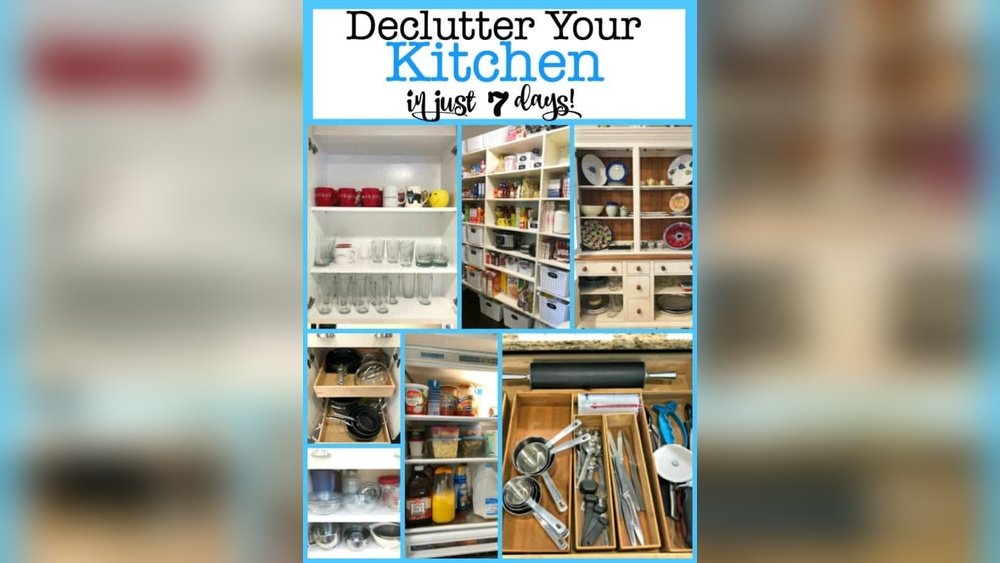
Take everything out of the pantry or cabinets. Check expiration dates on cans, spices, and packaged food. Throw away anything expired or stale. If you find food you won’t use, but it’s still good, place it in the donation box.
Group similar items together: baking supplies, canned goods, snacks, grains, etc. This makes it easier to see what you have.
Fridge And Freezer
Remove all food from the fridge and freezer. Wipe down shelves and drawers. Get rid of spoiled, expired, or freezer-burned items. Place leftovers in clear containers with labels showing the date.
Put similar foods together, such as dairy, vegetables, or sauces. This will help you use up food before it goes bad.
Drawers And Utensils
Dump out each drawer. Sort utensils by type. Keep only what you use often. For example, do you need five spatulas or three can openers?
Place broken or rusty items in the trash box. Donate duplicates or rarely used gadgets. Use dividers or trays to keep items neat.
Pots, Pans, And Bakeware
Stack pots and pans by size. Store lids separately or use a rack. If you have duplicates, keep the ones in best condition.
Be honest: If you never use a certain baking dish or specialty pan, let it go. Most kitchens only need a few essential pots and pans.
Dishes And Glassware
Take out all plates, bowls, and glasses. Match sets and check for cracks or chips. Keep enough for your family and a few guests.
If you have extra mugs or dishes, donate them. This frees up space and makes your cabinets look tidy.
Small Appliances
Review appliances like blenders, toasters, and coffee makers. Ask yourself: When did I last use this? If an appliance is broken or missing parts, recycle it. If you haven’t used it in a year, consider donating.
Store appliances you use daily on the counter. Put less-used items in cabinets or a pantry.
Cleaning Supplies
Check under the sink and in cleaning caddies. Toss empty bottles and old sponges. Group supplies by type (dish soap, sprays, brushes).
Store only what you use. Too many cleaners take up space and can be unsafe.
Organize What You Keep
After decluttering, it’s time to organize. This is where many people stop, but it’s the key to staying clutter-free.
Use The “zone” System
Divide your kitchen into zones based on activity:
- Cooking zone: Store pots, pans, and utensils near the stove.
- Prep zone: Keep knives, cutting boards, and mixing bowls together.
- Cleaning zone: Place dish soap, sponges, and towels near the sink.
- Food storage zone: Group pantry items, containers, and wraps in one area.
This system saves steps and makes cooking smoother.
Store Items By Frequency Of Use
Put everyday items on easy-to-reach shelves. Store special occasion dishes or rarely used tools on higher or lower shelves.
Label Containers And Shelves
Labels help everyone in the household know where things go. Use sticky notes at first, and upgrade to permanent labels later.
Use Clear Bins And Jars
Clear containers make it easy to see what you have. They prevent overbuying and keep food fresh.
Smart Storage Solutions
You don’t need expensive organizers. Many solutions are simple and cheap.
| Problem | Solution |
|---|---|
| Spices everywhere | Use a spice rack or tiered shelf inside a cabinet |
| Stacked pans fall over | Install a pan rack or use lid holders |
| Messy plastic containers | Nest containers and store lids in a bin |
| Unreachable back shelves | Add a lazy Susan or pull-out tray |
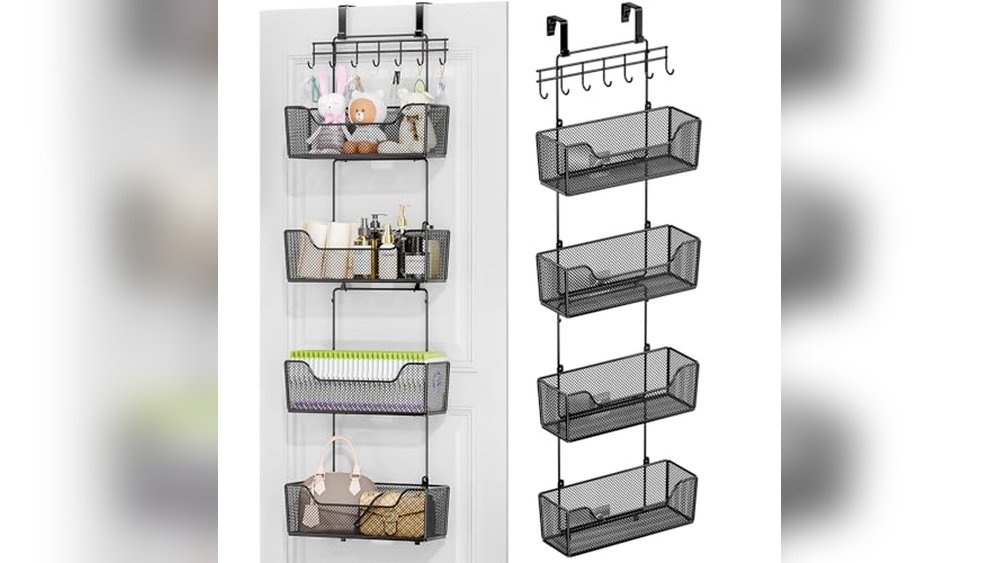
Look for unused space, such as the insides of cabinet doors, to hang measuring spoons or pot lids.
Make The Most Of Your Countertops
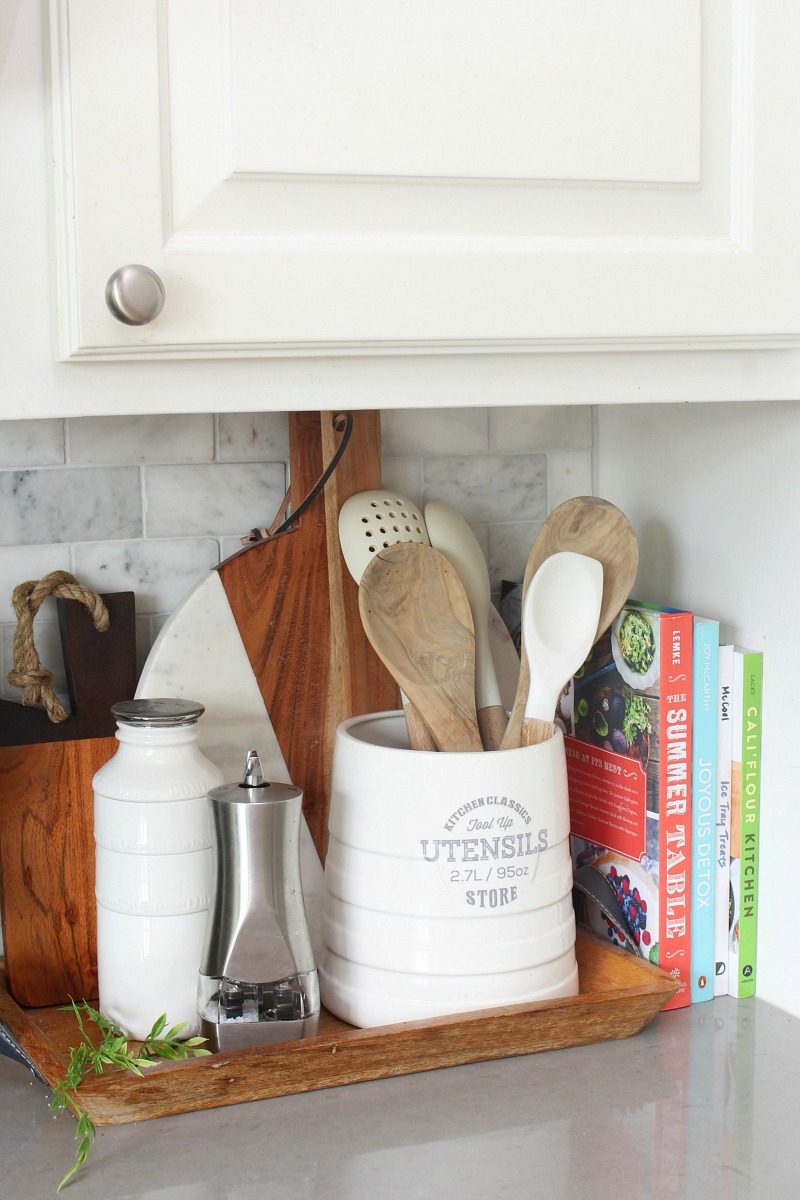
Counters should be as clear as possible. Keep out only daily essentials, such as a coffee maker or fruit bowl.
Store cutting boards, knife blocks, and toasters away unless you use them every day. A clear counter is easier to clean and gives you more room to work.
Create A Donation Habit
Set up a donation box in your pantry or garage. When you find something you no longer need, put it in the box right away. Once a month, donate the items. This habit keeps clutter from building up again.
Avoid Common Decluttering Mistakes
Many people make the same mistakes when decluttering their kitchens. Here’s how to avoid them:
- Trying to do everything at once: Work in sections to avoid burnout.
- Keeping broken or extra items “just in case”: If you haven’t used it in a year, let it go.
- Not measuring space: Before buying organizers, measure your shelves and drawers.
- Ignoring hidden clutter: Check above cabinets, behind appliances, and in “junk” drawers.
- Forgetting to clean as you go: Wipe surfaces before putting items back.

Credit: grillo-designs.com
Deep Clean As You Declutter
Take this opportunity to deep clean your kitchen. Wipe down shelves, scrub cabinet doors, and vacuum behind the fridge. This makes your kitchen feel truly fresh.
Maintain Your Organized Kitchen
Decluttering isn’t a one-time event. Set aside 10 minutes each week to tidy up. Put items back where they belong. Check the fridge for old food. Wipe counters daily.
Every few months, repeat the decluttering process in one area. This keeps your kitchen organized all year.
Real-life Example
Maria, a busy mother of two, spent years fighting kitchen clutter. She started by clearing her counters, then tackled one cabinet at a time. She created zones for baking, meal prep, and snacks. “Now my kids can find their snacks, and I can cook without stress,” she says.
“I even enjoy cleaning up because it’s so much easier. ”
How Decluttered Kitchens Save Money
Clutter hides food and tools, leading to wasted money. When you can see what you have, you avoid buying duplicates. The average American household throws away $1,500 worth of food every year due to spoilage and confusion, according to the U.S. Department of Agriculture. An organized kitchen helps you use what you buy and spend less at the store.
:max_bytes(150000):strip_icc()/declutter-kitchen-cabinets-2000-a2131ad13341471abc23430736859e5a.jpg)
Credit: www.realsimple.com
Eco-friendly Decluttering
Don’t just throw everything in the trash. Donate usable food and items. Recycle broken appliances and packaging. Many communities offer special recycling days for electronics and small appliances. Compost food scraps if possible.
Decluttering With Family
Get the whole family involved. Assign simple tasks to kids, such as sorting utensils or wiping shelves. Discuss why you’re decluttering and how it helps everyone. This teaches good habits and reduces future mess.
Credit: www.cleanandscentsible.com
When To Call A Professional
If you feel overwhelmed, or your kitchen is very cluttered, consider hiring a professional organizer. They can help you sort items, create systems, and make the process faster. Find certified organizers through the National Association of Productivity & Organizing Professionals.
Decluttering Myths Most People Believe
Some people think decluttering means getting rid of everything. In reality, it’s about keeping what you use and love, and letting go of the rest.
Another myth is that you need expensive storage products. Most kitchens can be organized with items you already have, like boxes, jars, and baskets.
How Long Does It Take?
The time needed depends on the size and current state of your kitchen. Here’s a general guide:
| Kitchen Size | Level of Clutter | Estimated Time |
|---|---|---|
| Small | Light | 2-3 hours |
| Small | Heavy | 4-5 hours |
| Medium | Light | 4-5 hours |
| Medium | Heavy | 6-8 hours |
| Large | Light | 6-8 hours |
| Large | Heavy | 1-2 days |
Break the process into steps and celebrate progress along the way.
Frequently Asked Questions
How Often Should I Declutter My Kitchen?
It’s best to do a quick tidy-up weekly and a deeper decluttering every 3-6 months. This keeps clutter from piling up and makes the job much easier.
What Should I Do With Unused Kitchen Gadgets?
If you haven’t used a gadget in the past year, donate it. If it’s broken, recycle it if possible. Keeping only what you use makes your kitchen more functional.
How Can I Keep My Kitchen Counters Clear?
Store only everyday essentials on the counter. Find a place for everything else in cabinets or drawers. Make it a habit to put things away after each meal.
Should I Buy Storage Organizers Before Decluttering?
No. Declutter first, then see what storage solutions you truly need. Measure your space before buying organizers to avoid wasting money.
What’s The Best Way To Organize A Small Kitchen?
Use vertical space with shelves and hooks. Store items by how often you use them. Keep counters clear and use clear bins to maximize every inch.
A decluttered kitchen brings peace of mind and makes daily life easier. Start small, stay consistent, and enjoy your tidy, welcoming space.