Are you confused about whether to choose deionized water or distilled water for your needs? You’re not alone.
Both types of water are incredibly pure, but they serve different purposes and have unique qualities that could impact your health, appliances, or projects. Understanding these differences can save you time, money, and potential headaches. You’ll discover what sets deionized water apart from distilled water, when to use each one, and why it matters for your daily life or work.
Keep reading to make the smartest choice for your water needs.
Deionized Water Basics
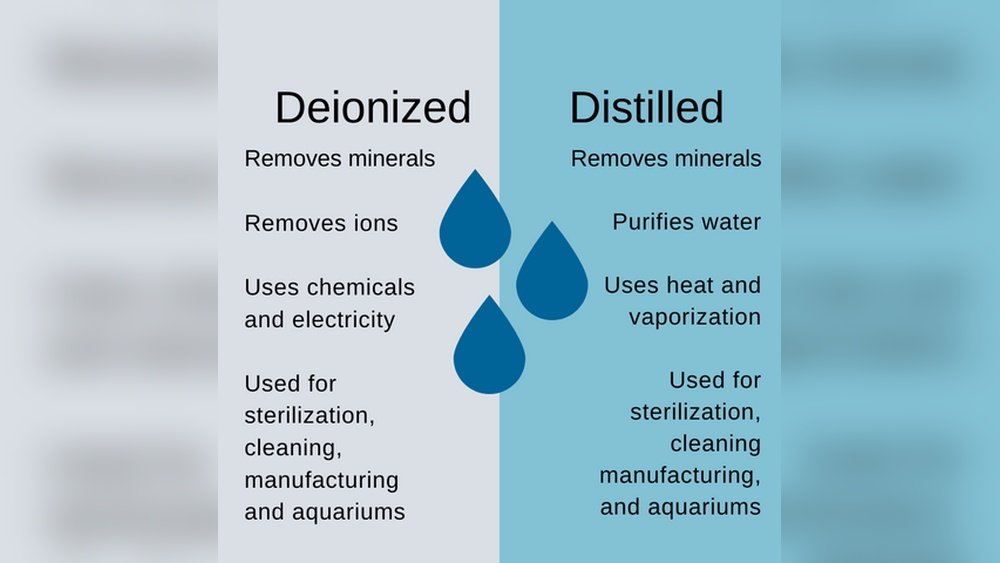
Deionized water is water that has had almost all of its mineral ions removed. These ions include calcium, magnesium, sodium, and chloride. Removing these ions makes the water very pure. This purity helps in many scientific and industrial processes.
Deionized water is not the same as distilled water, though both are very clean. Understanding how deionization works helps explain its uses and benefits.
How Deionization Works
Deionization uses special resins to remove ions from water. These resins swap unwanted ions with hydrogen and hydroxide ions. When these mix, they form pure water (H₂O). This process does not remove all impurities, like viruses or bacteria. It mainly targets charged particles.
The water passes through two types of resins: cation exchange and anion exchange. The cation resin removes positive ions. The anion resin removes negative ions. Together, they create very pure water free of salts and minerals.
Common Uses Of Deionized Water
Deionized water is used where mineral-free water is needed. Laboratories use it to avoid interference in tests. It is also common in electronics manufacturing to clean components. Car batteries and cooling systems use deionized water to prevent mineral build-up.
It is also used in pharmaceutical production and in steam irons. Deionized water helps keep equipment clean and free of deposits. Its purity makes it useful in many industrial and scientific fields.
Distilled Water Basics
Distilled water is a type of purified water that removes impurities and minerals. It is widely used where pure water is essential. Understanding its basics helps in comparing it with other types like deionized water.
Distilled water is clear and free from most contaminants. Its purity makes it ideal for many uses in homes and industries.
How Distillation Works
Distillation uses heat to boil water and create steam. The steam rises and leaves impurities behind. It then cools and turns back into liquid water. This process removes minerals, bacteria, and chemicals.
The result is clean water without dissolved solids. This water is safe for applications needing high purity.
Common Uses Of Distilled Water
Distilled water is used in medical settings, like hospitals. It helps in sterilizing equipment and making medicines. Laboratories rely on it for accurate testing and experiments.
It is also used in car batteries and steam irons. These devices need water free from minerals to avoid damage. Some people use distilled water in aquariums to keep fish healthy.
Purity Comparison
Purity is the main factor that separates deionized and distilled water. Both types remove impurities but use different methods. Understanding their purity helps decide which one fits your needs. The focus here is on comparing the purity of these waters.
Ion Removal Differences
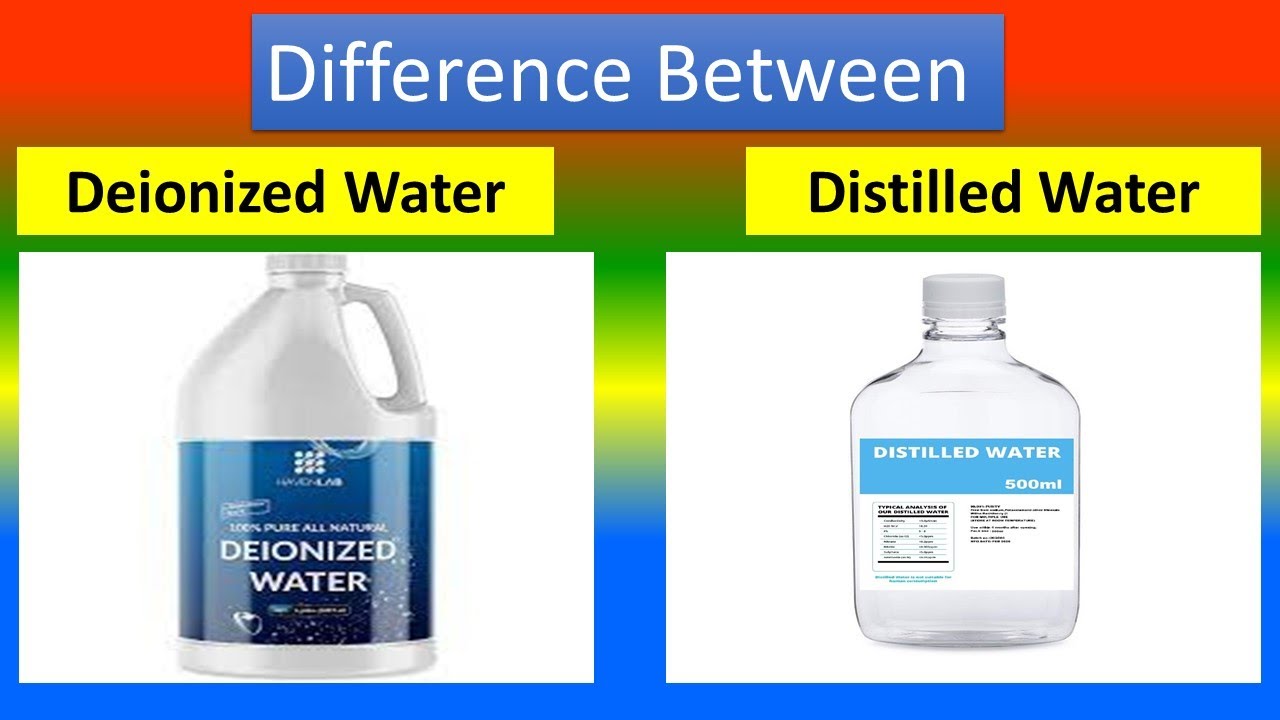
Deionized water removes charged particles called ions. It uses special resins to swap ions for hydrogen and hydroxide ions. This process removes salts and minerals. Distilled water removes impurities by boiling and condensing steam. It removes most ions and many other contaminants. However, some volatile compounds may stay in distilled water. Deionized water targets ions specifically. Distilled water removes a broader range of impurities.
Presence Of Microorganisms And Contaminants
Distillation kills most microorganisms because of high heat. This makes distilled water very clean and safe from microbes. Deionization does not kill microorganisms. It only removes ions, so bacteria and viruses may remain. Distilled water often has fewer contaminants overall. Deionized water might still have organic compounds or microbes. For very pure water free of microorganisms, distilled water is usually better.

Credit: www.differencebetween.net
Taste And Mineral Content
Understanding the taste and mineral content of deionized and distilled water helps in choosing the right type for your needs. Both types undergo purification but differ in mineral content and taste. These differences affect how they feel when you drink them and their impact on health.
Mineral Deficiency In Deionized Water
Deionized water has all minerals and ions removed. This includes important minerals like calcium and magnesium. These minerals are essential for the body’s daily functions.
Because deionized water lacks these minerals, it may pull minerals from the body’s tissues. This can cause mineral imbalances if consumed often. The water’s high purity makes it more reactive and able to leach minerals from soft tissues and tooth enamel.
For these reasons, drinking deionized water regularly is not recommended. It can lead to mild health effects like increased urination and nutrient loss over time.
Taste Profiles Of Both Waters
Distilled water has a clean, flat taste. It lacks minerals, which usually add flavor to water. Some people find distilled water bland or slightly dull.
Deionized water tastes very similar to distilled water. It also lacks minerals that give water a natural flavor. The difference in taste between the two is subtle and hard to detect for most people.
Both waters are much less flavorful than mineral or tap water. This is because minerals contribute to the water’s overall taste. If you prefer water with a richer taste, mineral water is a better choice.
Health And Safety
Health and safety play a crucial role in choosing between deionized and distilled water. Both types of water undergo purification but affect the body differently. Understanding their drinking effects helps make safer decisions for daily use. This section explains how each water type interacts with health.
Drinking Effects Of Deionized Water
Deionized water lacks minerals like calcium and magnesium. These minerals are important for the body’s daily needs. Drinking deionized water regularly may cause mineral loss from the body. It can pull minerals from tissues, which might weaken bones and teeth over time.
Deionized water is very pure but can be “hungry” or reactive. This means it can absorb substances easily, including minerals from the body. It may also lead to increased urination as the body tries to balance mineral levels. Small amounts are usually safe, but it is not ideal for regular drinking.
Drinking Effects Of Distilled Water
Distilled water is also free of minerals, but it is boiled and condensed to remove impurities. Like deionized water, it lacks essential minerals. Drinking distilled water long-term may reduce mineral intake unless you consume minerals through food.
Distilled water is safe to drink and less reactive than deionized water. It does not pull minerals from the body as aggressively. Many people use distilled water for health reasons, but it should not replace regular water with minerals completely.
Credit: www.youtube.com
Cost And Practicality
Understanding the cost and practicality of deionized and distilled water helps you choose the right type for your needs. Both offer high purity but differ in price and everyday use. This section breaks down these differences clearly.
Cost Differences
Distilled water usually costs more than deionized water. The distillation process requires heating water to create steam and then condensing it. This uses more energy and time, raising the price. Deionized water is made by passing water through special resin filters. This method is faster and cheaper.
Buying distilled water in stores can be more expensive because of packaging and transport. Deionized water is often produced on-site in industries, reducing costs. For simple tasks, deionized water offers a budget-friendly option. Distilled water fits better where very high purity is needed.
Suitability For Household Use
Deionized water suits many household uses like cleaning electronics or watering plants. It removes minerals that cause spotting or buildup. It is practical and safe for these tasks. Distilled water works well for appliances like steam irons or humidifiers, where mineral deposits can cause damage.
For drinking, neither type is ideal long-term because both lack minerals. Tap or mineral water is better for health. Distilled water is easy to find in stores, while deionized water may need special suppliers. Consider how you plan to use the water before buying.
Industrial And Laboratory Applications
Industrial and laboratory settings demand water with very low impurity levels. Both deionized and distilled water meet this need but serve different purposes. Choosing the right type depends on the specific requirements of the task. These waters ensure accuracy, prevent contamination, and protect equipment.
Why Deionized Water Is Preferred
Deionized water removes charged ions like calcium and magnesium. This makes it ideal for processes needing minimal ion content. Industries use it for cooling systems, cleaning machinery, and chemical production. It prevents scale build-up and corrosion in equipment.
Laboratories favor deionized water for preparing reagents and buffers. It offers consistent purity without the minerals that could affect experiments. The cost and ease of production make it a practical choice. Its use extends to rinsing glassware and diluting samples safely.
Why Distilled Water Is Used
Distilled water is free from most impurities, including bacteria and organic materials. It is produced by boiling water and collecting the steam. This process ensures very high purity, which some sensitive applications require.
In laboratories, distilled water is used for autoclaves and medical devices. It prevents deposits and damage caused by minerals. Industries use it in battery production and pharmaceuticals to avoid contamination. Its purity level makes it suitable for critical uses needing absolute cleanliness.
Choosing The Right Water
Choosing the right type of water for your needs is important. Both deionized and distilled water offer high purity. Yet, they serve different purposes based on their properties. Understanding these differences helps you select the best water type for your task.
Factors To Consider
Purity level is a key factor. Distilled water removes almost all impurities through boiling and condensation. Deionized water uses ion exchange to remove charged particles but may still contain some organic compounds.
Cost and availability also matter. Deionized water is usually cheaper and easier to produce in large amounts. Distilled water can be more expensive and takes longer to make.
Application needs influence choice too. Some uses require absolute purity, while others tolerate minor impurities.
When To Use Each Type
Use distilled water for medical equipment, laboratory tests, and steam irons. Its high purity prevents mineral buildup and contamination.
Choose deionized water for industrial processes, cooling systems, and car batteries. It is effective at removing ions that cause corrosion.
Avoid using deionized water for drinking or cooking because it lacks essential minerals. Distilled water is safer for consumption but still not ideal for regular drinking.

Credit: uswatersystems.com
Frequently Asked Questions
Can I Use Deionised Water Instead Of Distilled Water?
You can use deionised water instead of distilled water for many applications. Distilled water suits tasks requiring absolute purity. Deionised water lacks minerals and may contain impurities. Choose based on your specific need for purity and cost-effectiveness.
Can We Drink Deionized Water?
You can drink deionized water occasionally, but avoid regular use. It lacks essential minerals and may leach minerals from your body. It also might contain contaminants without further purification. For daily hydration, choose filtered or mineral water instead.
Is Deionized Water Ok For A Cpap Machine?
Deionized water is safe for CPAP machines but less ideal than distilled water. It lacks minerals and may corrode parts over time. Distilled water remains the best choice to prevent buildup and ensure machine longevity.
Is Deionized Water Better Than Distilled Water?
Deionized water removes minerals using ion exchange, while distilled water uses boiling and condensation. Distilled water is purer and better for sensitive uses. Deionized water suits industrial tasks but may lack the purity needed for some applications. Choose based on your specific needs.
Conclusion
Choosing between deionized and distilled water depends on your needs. Deionized water is cost-effective and good for many industrial uses. Distilled water offers higher purity, ideal for sensitive tasks. Neither is perfect for drinking regularly due to lack of minerals.
Both types serve specific purposes well. Understanding their differences helps you pick the right water. Use each type where it fits best for safety and effectiveness. Simple choices lead to better results.