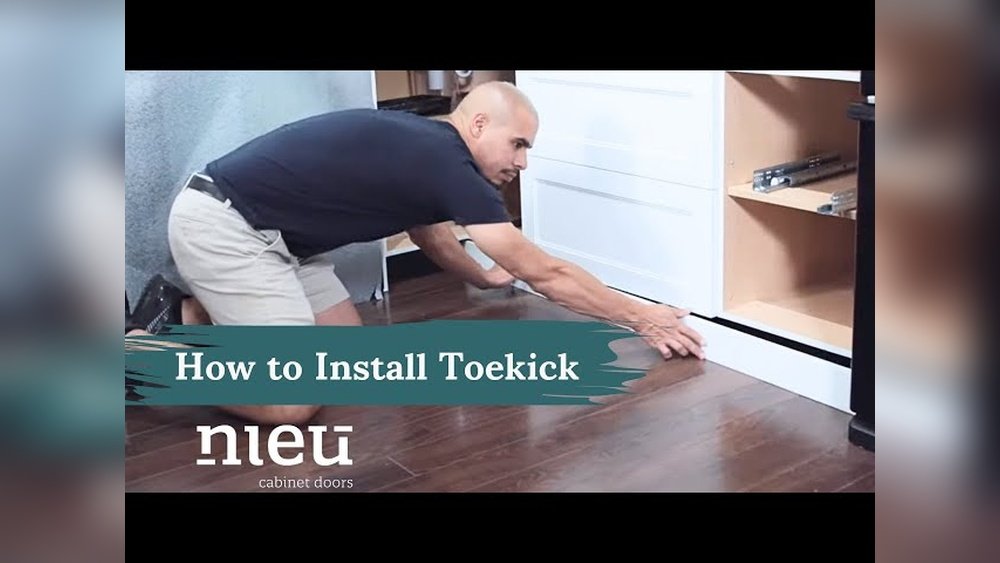
Installing a toe kick in your kitchen or bathroom might seem like a small task, but it makes a big difference in how your cabinets look and function. The toe kick is that recessed area at the bottom of base cabinets—a clever detail that lets you stand closer to your workspace without bumping your toes.
For DIYers, learning how to install a toe kick is a useful skill that can upgrade a room’s appearance and comfort. This guide will walk you through every step, from choosing materials to achieving a professional finish, while sharing practical tips and avoiding common mistakes.
What Is A Toe Kick And Why Is It Important?
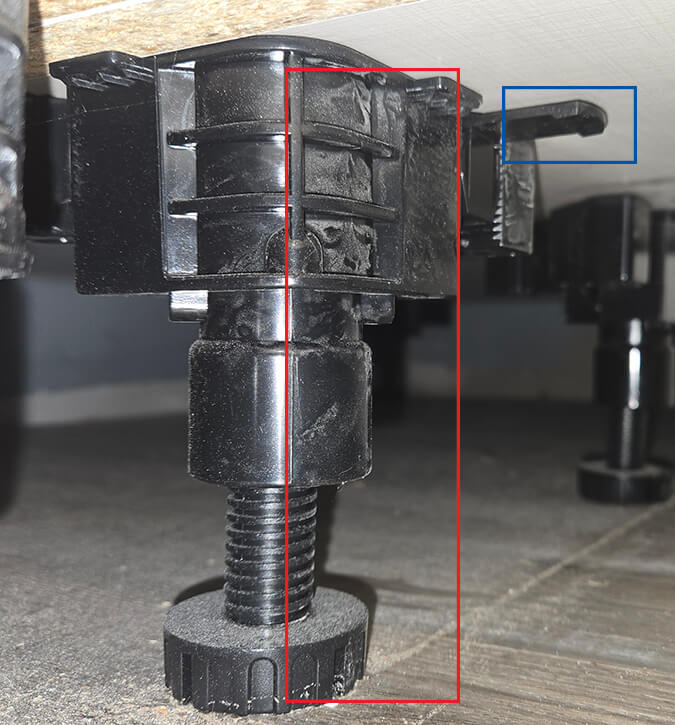
A toe kick is a recessed space beneath the front of a base cabinet, usually about 3.5 inches high and 3 inches deep. Its main purpose is to give your feet room while you work at the counter, helping you stand closer without leaning. While it may seem like a simple detail, the toe kick also hides cabinet legs and plumbing, creates a clean line, and protects the base from scuffs and mops.
A well-installed toe kick can:
- Improve comfort and reduce back strain while cooking or washing dishes
- Give cabinets a finished and professional look
- Prevent dirt and water from collecting under cabinets
Many beginners underestimate the impact of a precise toe kick installation. Poorly fitted pieces can warp, allow moisture inside, or make your kitchen look unfinished.
Tools And Materials Needed
Before starting, gather all your tools and materials. Having everything ready will save time and prevent frustration halfway through the project.
Essential tools:
- Measuring tape
- Pencil or marker
- Miter saw or hand saw
- Utility knife
- Caulk gun
- Drill with screwdriver bit
- Hammer (optional)
- Clamps (optional)
- Putty knife
- Safety glasses
Materials:
- Toe kick boards (usually matching your cabinets)
- Construction adhesive or wood glue
- Finishing nails or screws (1″–1.5″ long)
- Color-matched caulk or wood filler
- Touch-up paint or stain (if needed)
Pro tip: Order an extra length of toe kick board in case of mistakes or unexpected cuts.
Measuring And Planning
Getting your measurements right is the foundation of a smooth installation. Even a small error can lead to gaps or misalignment.
- Measure the total length of the cabinet bases where you’ll install the toe kick. Add a few inches for overlap at corners or mistakes.
- Check the height from the floor to the bottom of the cabinet. Standard toe kicks are 3.5 inches tall, but always measure your actual cabinets.
- Plan for obstacles like dishwasher gaps, pipes, or uneven floors. Make a list of any sections that need special cuts.
Example: If your cabinet run is 96 inches and includes a 24-inch dishwasher space, subtract that from your toe kick length, unless you want a continuous piece.
Choosing The Right Toe Kick Material
Toe kick boards come in several common materials. Choosing the right one affects durability, appearance, and water resistance.
| Material | Appearance | Durability | Water Resistance | Cost |
|---|---|---|---|---|
| MDF (Medium Density Fiberboard) | Paintable, smooth | Moderate | Low | Low |
| Plywood | Veneer options | High | Medium | Medium |
| Solid Wood | Natural grain | High | Medium | High |
| Plastic Laminate | Color-matched | High | High | Medium |
If your kitchen gets a lot of water on the floor, plastic laminate toe kicks are a smart choice. For custom cabinets, solid wood or plywood with veneer can give a high-end look.
Credit: www.klearvuecabinetry.com
Cutting Toe Kick Boards To Size
Precision in cutting is essential for a seamless fit. Here’s how to do it:
- Mark your cuts: Use your measuring tape and pencil to mark the correct length on the toe kick board.
- Double-check measurements before cutting—measure twice, cut once.
- Cut with a miter saw for straight, clean edges. If you don’t have one, a hand saw will work, but go slowly for accuracy.
- Dry-fit each piece before attaching. Place the cut toe kick against the cabinet base to check for fit and alignment.
Non-obvious tip: Floors are rarely perfectly level. If your floor slopes, mark and trim the bottom of your toe kick at an angle so it sits flush.
Securing The Toe Kick In Place
There are two main ways to attach toe kicks: nailing/screwing or gluing. Each has its advantages.
| Method | Strength | Difficulty | Removability | Best For |
|---|---|---|---|---|
| Nails or Screws | High | Moderate | Easy | Wood cabinets, uneven walls |
| Construction Adhesive | Moderate | Easy | Difficult | Laminate, smooth surfaces |
Step-by-step:
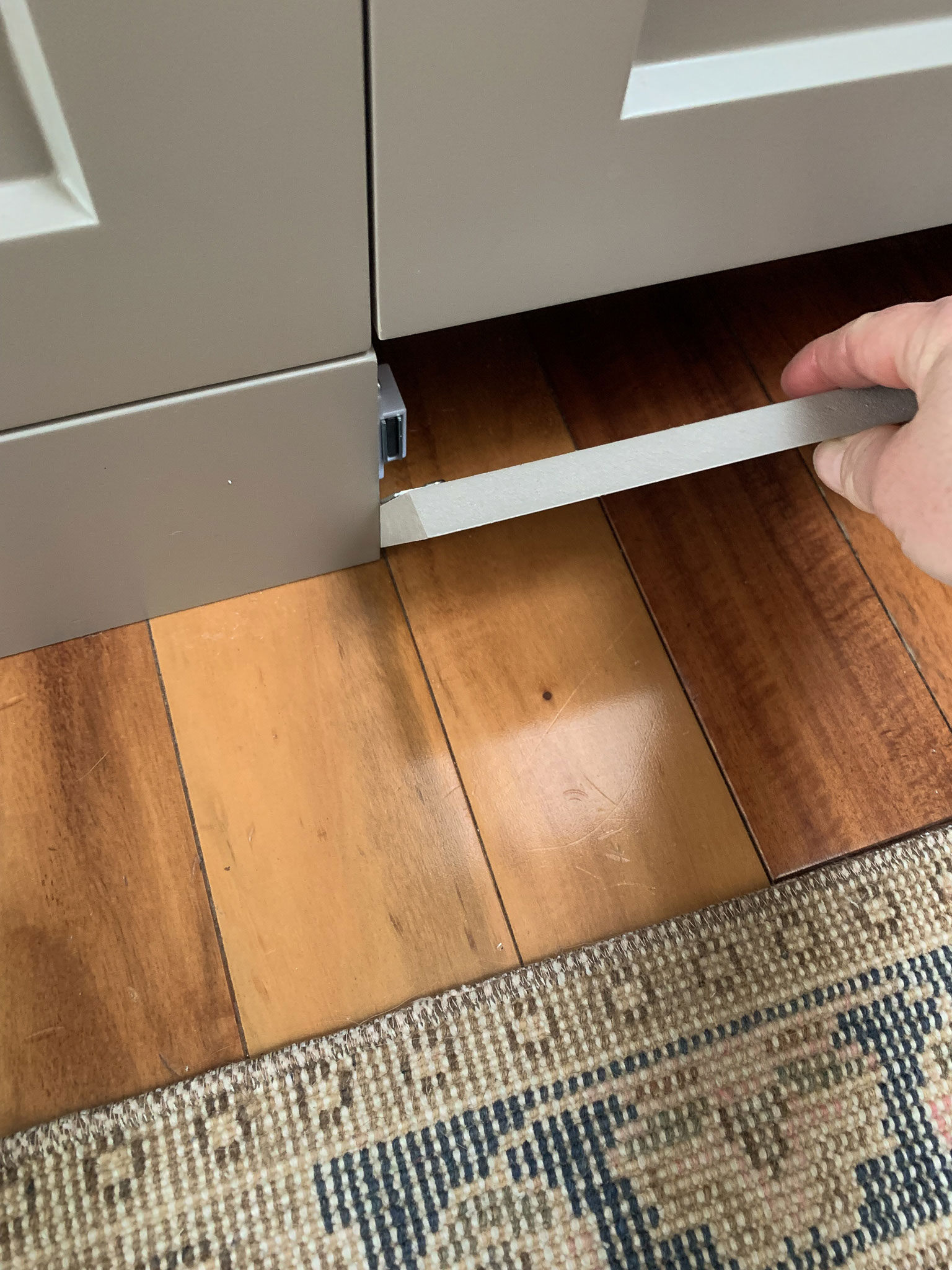
- Apply adhesive: If using glue, run a bead along the back of the toe kick.
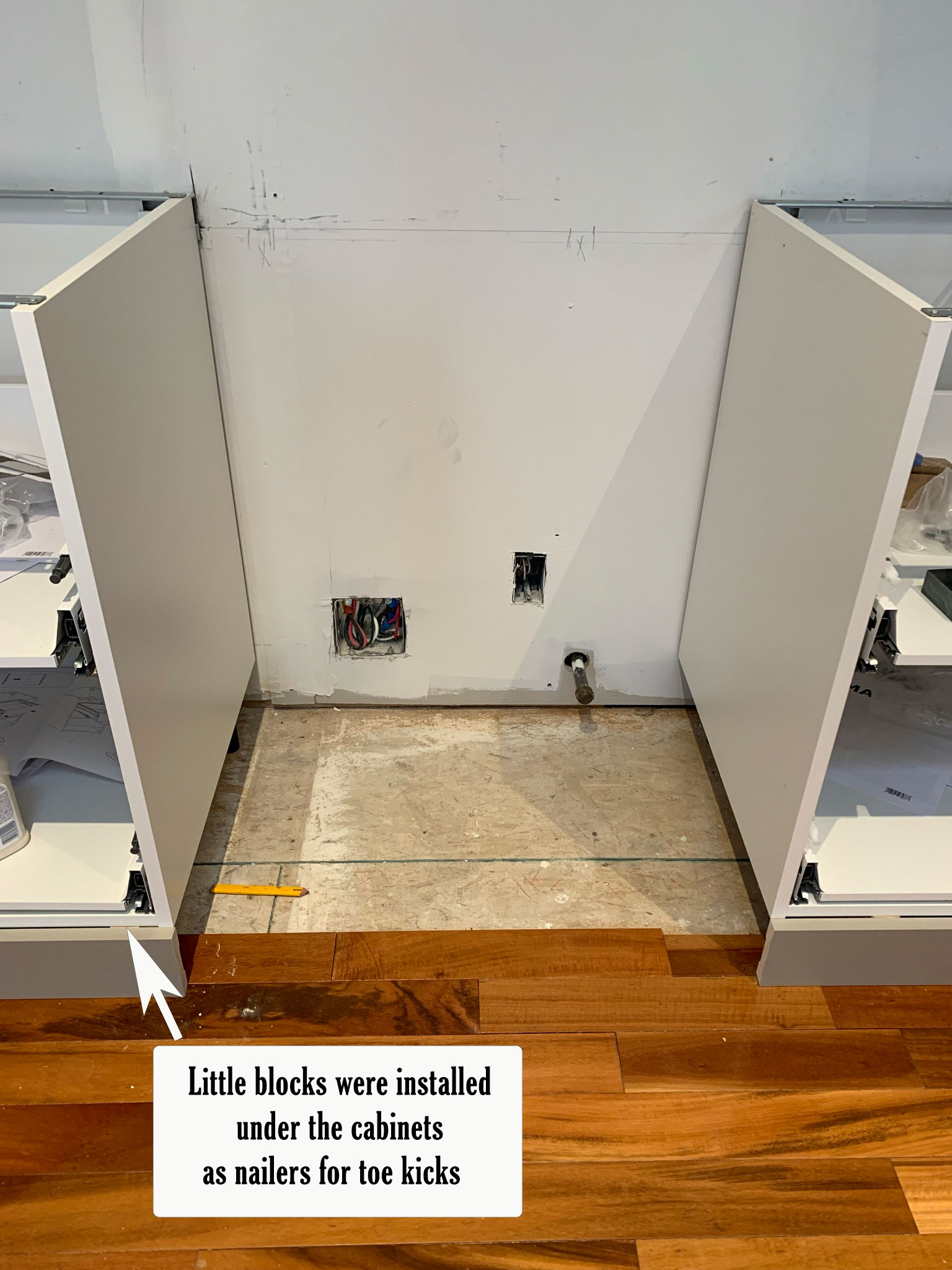
- Position the board: Align the piece under the cabinet, pressing firmly into place.
- Secure with nails or screws: Insert fasteners every 16–24 inches. For a cleaner look, use finishing nails and set them slightly below the surface with a nail set.
- Clamp if necessary: If boards bow, use clamps to hold them flush while the adhesive sets.
Pro tip: Always avoid driving nails or screws near the edge to prevent splitting the board.
Credit: erinzubotdesign.com
Dealing With Corners And Obstacles
Corners and appliances can make installation tricky. Here’s how to handle them:
Inside And Outside Corners
- Miter the ends at a 45-degree angle where toe kicks meet at a corner. This creates a clean, tight joint.
- For inside corners, cut one piece square and the other at a 45-degree angle to overlap.
Appliance Gaps
- Toe kicks should stop at dishwasher or oven gaps, leaving space for removal and maintenance.
- If you want a continuous look, use a removable toe kick panel in front of appliances.
Pipes Or Vents
- Measure and mark the location of obstacles.
- Use a jigsaw or hole saw to cut precise openings so the toe kick fits around them.
Beginner mistake: Failing to account for these obstacles leads to last-minute patchwork and a messy look.
Finishing Touches For A Professional Look
After your toe kicks are installed, a few finishing steps will make your work look polished and last longer.
- Fill nail holes with wood filler or color-matched putty. Let dry, then sand smooth.
- Seal seams where toe kicks meet walls or cabinets using caulk. This prevents water and debris from getting behind the boards.
- Touch up paint or stain to match your cabinets, especially on cut edges or filled holes.
- Clean up any adhesive squeeze-out before it dries.
Advanced tip: For kitchens with tile floors, run a thin bead of clear silicone along the bottom of the toe kick to block water without making it look bulky.
Common Mistakes And How To Avoid Them
Even experienced DIYers can make small errors that ruin the final appearance. Watch out for these:
- Skipping floor leveling: If the floor is sloped, toe kicks may look crooked. Scribe the bottom edge to match the floor.
- Using the wrong fasteners: Nails that are too long can split boards or damage cabinet frames.
- Not allowing for expansion: In humid climates, wood toe kicks can expand. Leave a tiny gap at ends and fill with flexible caulk.
- Neglecting color matching: Even slight differences in paint or stain will show. Order matching toe kick boards from your cabinet manufacturer if possible.
When To Hire A Professional
While most homeowners can install toe kicks themselves, there are times when hiring a pro makes sense:
- Large kitchens with long cabinet runs and many corners
- Historic homes with uneven floors and walls
- High-end kitchens where perfect appearance is critical
A professional installer brings specialized tools and experience that can save time and prevent costly mistakes. If you’re unsure about your skills or the job is complex, consider getting a quote.
Credit: erinzubotdesign.com
Cost And Time Estimates
Most DIY toe kick installations can be completed in a weekend. Here’s what to expect:
- Time: 2–4 hours for a small kitchen, up to 8 hours for large spaces
- Materials cost: $20–$100, depending on material and kitchen size
- Tools: Most are common in household toolkits
Hidden cost: If you make a mistake with a visible corner or cut, you may need to buy another board. Having a little extra material on hand is wise.
Example: Installing A Toe Kick In A Standard Kitchen
Let’s say your kitchen has a 10-foot straight run of cabinets with an L-shaped corner. Here’s a quick summary of the process:
- Measure the total length and cut two boards—one for the straight run, one for the L section.
- Miter the end of each at 45 degrees for a tight corner joint.
- Dry-fit both boards, checking that they’re flush with the cabinet and floor.
- Apply adhesive and attach with finishing nails.
- Fill, sand, and touch up for a seamless look.
This project can be completed by one person with basic tools and a bit of patience.
Frequently Asked Questions
How Do I Match The Toe Kick Color To My Cabinets?
Most cabinet makers sell pre-finished toe kick boards that match your cabinets exactly. If not, take a sample to a paint store for a custom match. Using leftover cabinet paint or stain ensures the closest result.
Can I Install A Toe Kick Over Tile Or Vinyl Flooring?
Yes, you can install toe kicks over most flooring types. Just be sure the surface is clean and dry. If the floor is uneven, scribe and trim the toe kick’s bottom edge to fit tightly.
How Do I Remove An Old Toe Kick?
Carefully pry the old toe kick off using a putty knife or flat bar. Go slowly to avoid damaging the cabinet frame. Remove any old nails or adhesive before installing the new piece.
What Should I Do If My Floor Is Not Level?
Use a scribe tool or compass to mark the floor’s contour on the bottom edge of the toe kick. Trim along this line for a tight fit. This prevents gaps and gives a professional result.
Is It Necessary To Caulk The Toe Kick?
Caulking is recommended where the toe kick meets the cabinet or wall. It blocks moisture and dirt from getting behind the board, helping it last longer and look finished.
For more information on cabinet construction and toe kicks, you can visit the Cabinetry Wikipedia page.
Installing a toe kick is a detail that often goes unnoticed—until it’s missing or done poorly. With the right tools, careful measurements, and these step-by-step instructions, you can give your kitchen or bathroom a polished, professional look that’s both practical and beautiful.
Remember, patience and attention to detail are your best friends. Good luck with your project!