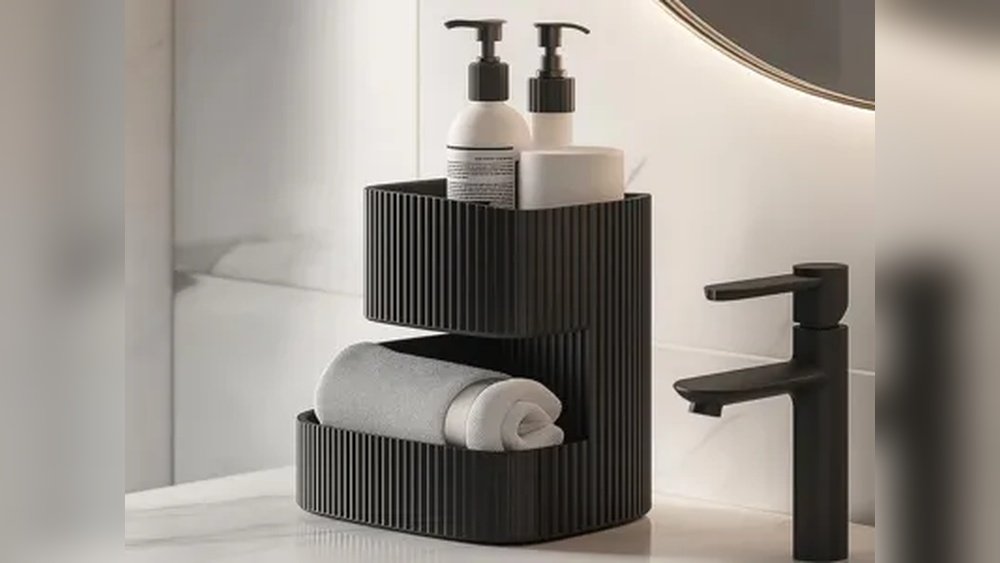
A messy bathroom can create stress before your day even begins. Imagine searching for your razor, untangling jewelry, or finding your favorite face cream buried at the back of a drawer. Many people wish for a more organized bathroom, but struggle to find the right solution. This is where a 3D print bathroom organizer comes in. With 3D printing, you can create custom organizers that fit your space, style, and needs perfectly. This article explores the world of 3D printed bathroom organization—what it is, why it matters, and how you can design, print, and use your own solutions for a neater, happier bathroom.
Why 3d Print A Bathroom Organizer?
Traditional bathroom organizers are often generic and may not fit your unique space or needs. They might not match your style, and can be expensive if you want something custom. With 3D printing, you have the power to design and create organizers that are truly made for you.
You can adjust the size, shape, and number of compartments. Want a soap holder that fits that awkward corner? Or a toothbrush stand with extra slots? 3D printing makes it possible. Plus, you choose the color and material, so the organizer matches your bathroom perfectly.
And, for many, printing organizers at home is much cheaper than buying from a store.
Another big advantage: you can print replacements or extras anytime. If you need a new hook or tray, you don’t have to search for the exact match online. Just print another one.
Types Of 3d Print Bathroom Organizers
Not all bathrooms have the same challenges. Below are some of the most popular and useful organizer designs you can 3D print.
1. Toothbrush Holders
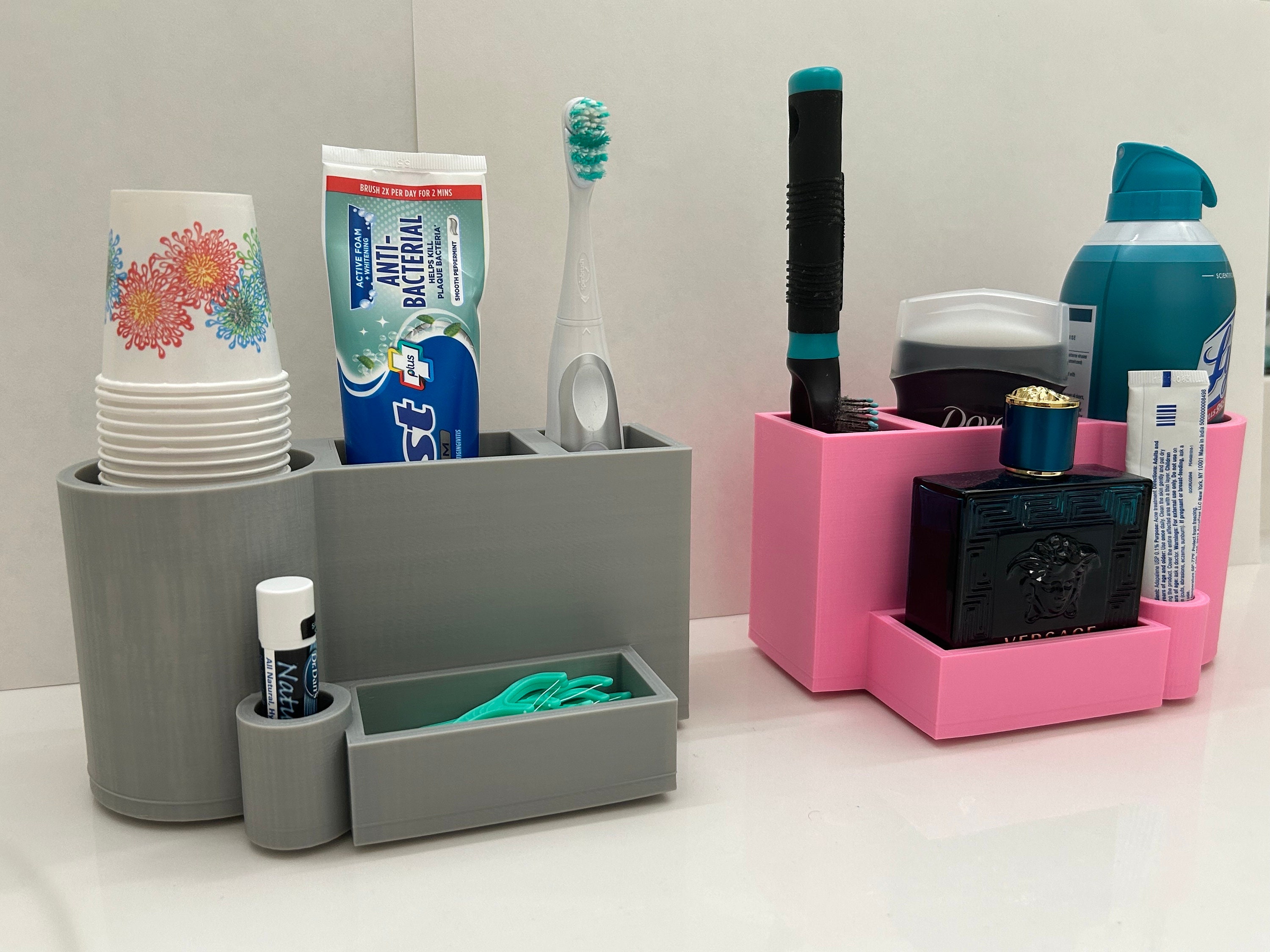
A 3D printed toothbrush holder can be customized for the number of people in your home, the size of your toothbrushes, or even include a spot for toothpaste. Some designs have drainage holes to keep things dry and clean. You can also add names or symbols for each family member.
2. Soap Dishes
Soap often gets mushy and messy. A 3D printed soap dish can have raised ridges or a slotted base so water drains away. You can make one that fits your sink or shower perfectly, or even create a wall-mounted soap dish to save counter space.
3. Drawer Dividers
Bathroom drawers get cluttered fast. 3D printed drawer dividers let you create sections for each item—hair ties, razors, makeup, floss, and more. You can measure your drawer and design dividers that fit exactly, making it easier to find everything you need.
4. Shower Caddies
A 3D printed shower caddy can be made to fit your shower head, tile wall, or a corner space. You can add hooks for loofahs, shelves for bottles, and even spots for razors. Most store-bought caddies are a one-size-fits-all solution, but with 3D printing, you get a perfect fit.
5. Wall Hooks And Hangers
Bathrooms often lack places to hang towels, robes, or brushes. With 3D printed wall hooks, you can choose the size, shape, and color. Some people print fun shapes—like animals or geometric designs—to add personality to their bathroom.
6. Makeup And Cosmetic Organizers
Cosmetic organizers need lots of small sections for brushes, lipsticks, and bottles. 3D printing lets you design trays, tiered stands, or even rotating organizers that match your collection exactly.
7. Razor Holders
Avoid rusty razors left on the sink. 3D printed razor holders can be mounted on the wall or inside a cabinet. Some holders fit more than one razor, or even hold extra blades.
8. Jewelry Dishes And Stands
Keep rings and earrings safe and dry. 3D printed jewelry dishes can be made in any style, from simple bowls to detailed tree-shaped stands. You can print small trays that fit into drawers or larger stands for the countertop.
9. Cleaning Tool Organizers
Store brushes, sponges, or small bottles with a custom organizer. Many designs use clips or slots to keep tools upright and dry, which helps them last longer and keeps your bathroom tidy.
10. Medicine And First Aid Trays
Medicines and bandages can be dangerous if left loose. 3D printed medicine trays help you keep everything organized and out of reach of children. You can add labels or different levels for easy sorting.
How To Design Your Own 3d Print Bathroom Organizer
Designing your own organizer may sound complicated, but it can be simple if you take the right steps.
- Measure your space: Use a ruler or tape measure to get the exact length, width, and height of the spot where the organizer will go.
- List what you need to store: Write down everything you want to organize—like razors, bottles, brushes, or jewelry.
- Sketch your design: Draw a simple sketch on paper. Think about how many compartments you need and where each item should go.
- Use 3D modeling software: There are free, easy-to-use programs like Tinkercad or Fusion 360. These let you build your organizer in 3D, adjust measurements, and even add labels or decorations.
- Save your file: Export your design as an STL file, which is the standard for 3D printing.
If designing from scratch feels too hard, many websites offer free, ready-made models. You can download these, adjust them if needed, and print them directly.
Best Materials For 3d Printed Bathroom Organizers
Bathrooms are wet and humid places, so not all 3D printing materials work well. Here’s a comparison of common choices:
| Material | Water Resistance | Strength | Ease of Printing | Best Uses |
|---|---|---|---|---|
| PLA | Medium | Medium | Easy | Drawer dividers, cosmetic trays |
| PETG | High | High | Medium | Soap dishes, shower caddies |
| ABS | Medium | High | Hard | Wall hooks, razor holders |
PETG is often the best choice for the bathroom because it is strong and resists water well. PLA is easy to print but can warp or get soft if it stays wet. ABS is tough, but needs good ventilation during printing because of fumes.
Steps To 3d Print A Bathroom Organizer
If you’re new to 3D printing, these steps will help you get started:
- Choose your design: Download a ready-made file or create your own.
- Select material: For most bathroom uses, PETG is best, but PLA works for dry areas.
- Prepare your printer: Make sure your 3D printer is clean, level, and loaded with the right filament.
- Slice the model: Use slicing software to turn your STL file into printer instructions (G-code). Check the settings for infill (how solid the object is), support structures, and print speed.
- Print a test piece: If you’re unsure, print a small piece first to check the size and fit.
- Print the final organizer: Start the full print and monitor the first layer to make sure it sticks well.
- Finishing touches: Remove support material, sand rough edges if needed, and wash the organizer before using it.
Cost Comparison: 3d Printing Vs. Buying
Many people wonder if 3D printing is really cheaper. Here’s a sample comparison:
| Item | 3D Printing Cost | Store Price | Customizable? |
|---|---|---|---|
| Toothbrush holder | $2 (filament) | $10–$15 | Yes |
| Soap dish | $1.50 | $7–$12 | Yes |
| Drawer divider | $3 | $10–$20 | Yes |
You do need a 3D printer, which is an investment. But once you have one, most organizers cost only a few dollars in plastic. Plus, the ability to customize is hard to match with store-bought solutions.

Credit: www.reddit.com
Practical Tips For Successful 3d Printed Organizers
- Use rounded corners: Sharp corners can break more easily, especially for small hooks or thin trays.
- Add drainage holes: For soap dishes or shower caddies, holes keep water from pooling.
- Choose the right infill: More infill means a stronger organizer, but uses more material. For most bathroom organizers, 20–40% infill is strong enough.
- Test fit: Print a small version first to check the size, especially for tight spaces.
- Label compartments: Add raised text or symbols during design to show what goes where. This helps everyone in the family stay organized.
Common Mistakes To Avoid
- Ignoring humidity: Some plastics, like PLA, can soften or warp in a steamy bathroom. Choose PETG or ABS for wet areas.
- Too thin walls: Thin organizers can crack or break. Use at least 2–3mm wall thickness for strength.
- No drainage: Soap dishes or caddies without drainage holes will collect water and grow mold.
- Overcomplicating the design: Simple designs are easier to print and clean. Fancy shapes can look nice, but may be hard to use or keep clean.
- Not measuring accurately: Always double-check your space before printing. Many beginners waste material by printing organizers that don’t fit.
Where To Find 3d Print Bathroom Organizer Designs
If you’re not ready to design your own, there are many websites with free or paid STL files you can download. Some popular options are:
- Thingiverse: Thousands of bathroom organizer designs, from simple trays to complex caddies.
- Printables: A growing platform with high-quality, tested organizer files.
- Cults3D: Offers both free and paid models, often with creative or stylish designs.
Always check the reviews and print settings before starting. Some models are tested by the community, while others may need small changes.
The Environmental Impact
3D printing can help reduce waste. Instead of buying many organizers over the years, you can print replacements or upgrades as needed. If you use recyclable filaments (like PETG or PLA made from plants), the environmental cost is even lower. Plus, you can avoid extra packaging and shipping pollution that comes with store-bought products.
However, it’s important to recycle failed prints and old organizers properly. Some cities have special programs for 3D printed plastics.
Credit: www.etsy.com
Real-world Examples
- Family with kids: Printed toothbrush holders with names and fun shapes, making brushing teeth more fun and organized.
- Small apartment: Custom-fit drawer dividers turned a crowded vanity into a neat space, saving five minutes every morning.
- Elderly couple: Large-label medication trays made it easy to sort pills and stay safe.
These examples show the flexibility and practical value of 3D printed organizers.
Future Trends In 3d Printed Bathroom Organization
As 3D printing grows, expect even more options. New materials are coming—some resist bacteria, others glow in the dark for easy night use. Smart organizers may soon include sensors to track supply levels, or connect to your phone to remind you to restock.
Open-source design communities are sharing more creative models. This means you can find organizers for almost any need, or share your own designs with others.
For more on 3D printing trends, see this Wikipedia overview.

Credit: makerworld.com
Frequently Asked Questions
What 3d Printer Do I Need For Bathroom Organizers?
Most home 3D printers can print bathroom organizers. A printer with a build size of 200x200x200mm is enough for most items. Look for models that support PETG or ABS filament for better water resistance.
Can I Use Pla Plastic In The Bathroom?
PLA is fine for dry areas like drawers or countertop trays. For soap dishes or shower caddies, use PETG or ABS, as these are more resistant to water and heat.
How Long Does It Take To Print A Bathroom Organizer?
A small toothbrush holder can print in 1–2 hours. Larger organizers, like a shower caddy, may take 6–8 hours or more. Printing time depends on size, infill, and your printer’s speed.
Are 3d Printed Organizers Safe For Kids?
Yes, if you use non-toxic, food-safe filament and sand any sharp edges. Avoid small, breakable parts if young children may handle them. Always check that hooks and holders are securely mounted.
Where Can I Find Bathroom Organizer Designs To Print?
Websites like Thingiverse, Printables, and Cults3D offer many free and paid designs. Search for “bathroom organizer STL” and look for models with good reviews or community feedback.
3D printing your own bathroom organizer is not just about saving money—it’s about creating a space that works for you. With the power of customization, smart material choices, and a little creativity, you can bring order and style to one of the most important rooms in your home.