Adjusting cabinet hinges may seem simple, but it’s a common source of frustration for homeowners and DIYers. Cabinet doors that don’t close properly, look uneven, or scrape against the frame can make any kitchen or bathroom look untidy. The good news?
Most modern cabinets use adjustable hinges, and with the right approach, you can fix alignment and closing issues yourself—no professional needed. Let’s explore how to adjust cabinet hinges correctly, avoid common mistakes, and achieve a neat, professional look.
Understanding Cabinet Hinges
Before you grab a screwdriver, it’s important to know what type of hinge you’re dealing with. Most cabinets today use European-style concealed hinges, sometimes called cup hinges. These are hidden when the door is closed, offering a clean look. Other cabinets, especially older ones, may have surface-mounted hinges (visible from the outside). This guide will focus on the most common adjustable concealed hinges, but the principles apply to most modern cabinets.
Basic Hinge Parts
A typical concealed hinge has two main parts:
- The mounting plate attaches inside the cabinet frame.
- The hinge arm connects the plate to the door.
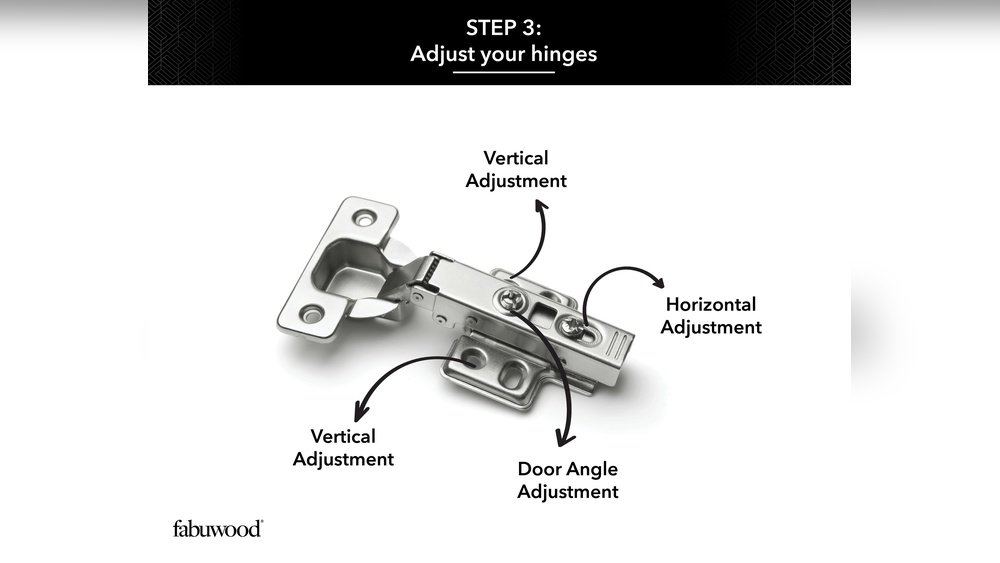
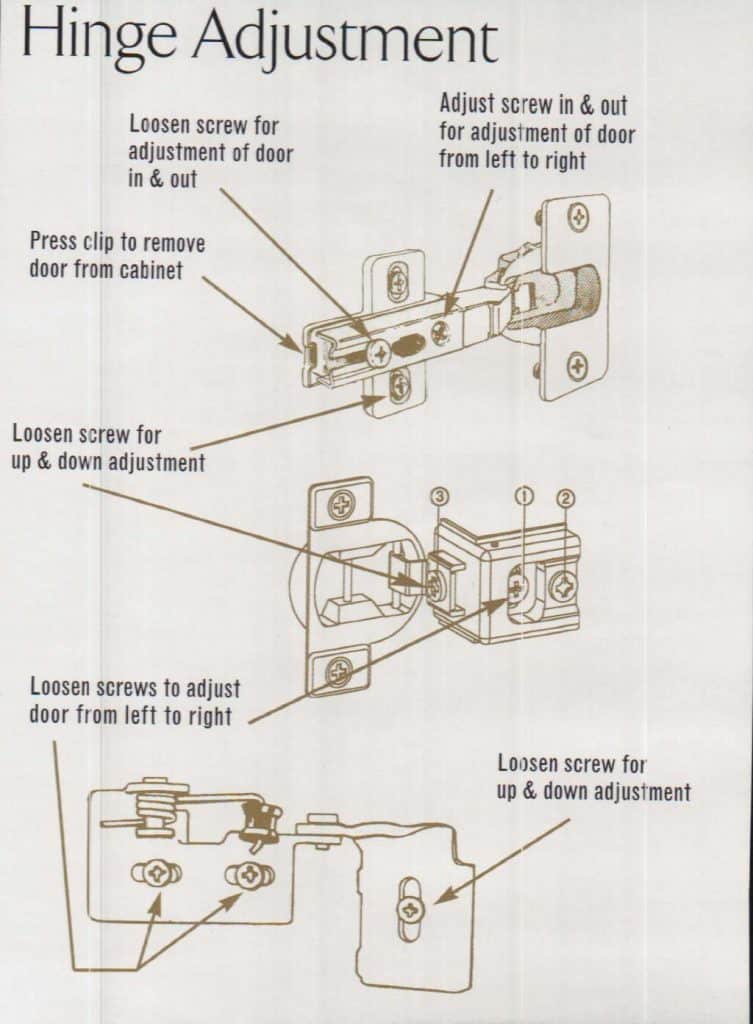
Three adjustment screws allow you to move the door in different directions:
- Side-to-side (left/right)
- Height (up/down)
- Depth (in/out)
Knowing which screw does what is the key to a perfect fit.
When And Why You Need To Adjust Cabinet Hinges
Cabinet doors can get misaligned for many reasons:
- Wood expands or contracts with humidity.
- Hinges loosen over time with use.
- New doors or hardware may not line up perfectly.
You may notice:
- Doors that won’t close all the way.
- Gaps between doors.
- Doors rubbing or scraping against the frame.
- Uneven lines when doors are shut.
Tackling these problems early prevents long-term damage and keeps your space looking its best.

Credit: www.familyhandyman.com
Tools And Preparation
You don’t need fancy tools to adjust cabinet hinges, but preparation helps:
- Phillips screwdriver (most common)
- Flathead screwdriver (sometimes needed)
- Measuring tape or ruler
- Pencil for marking
- Flashlight (optional, for dark cabinets)
Tip: Work on one door at a time to avoid confusion. Take a “before” photo if you want to remember the original position.
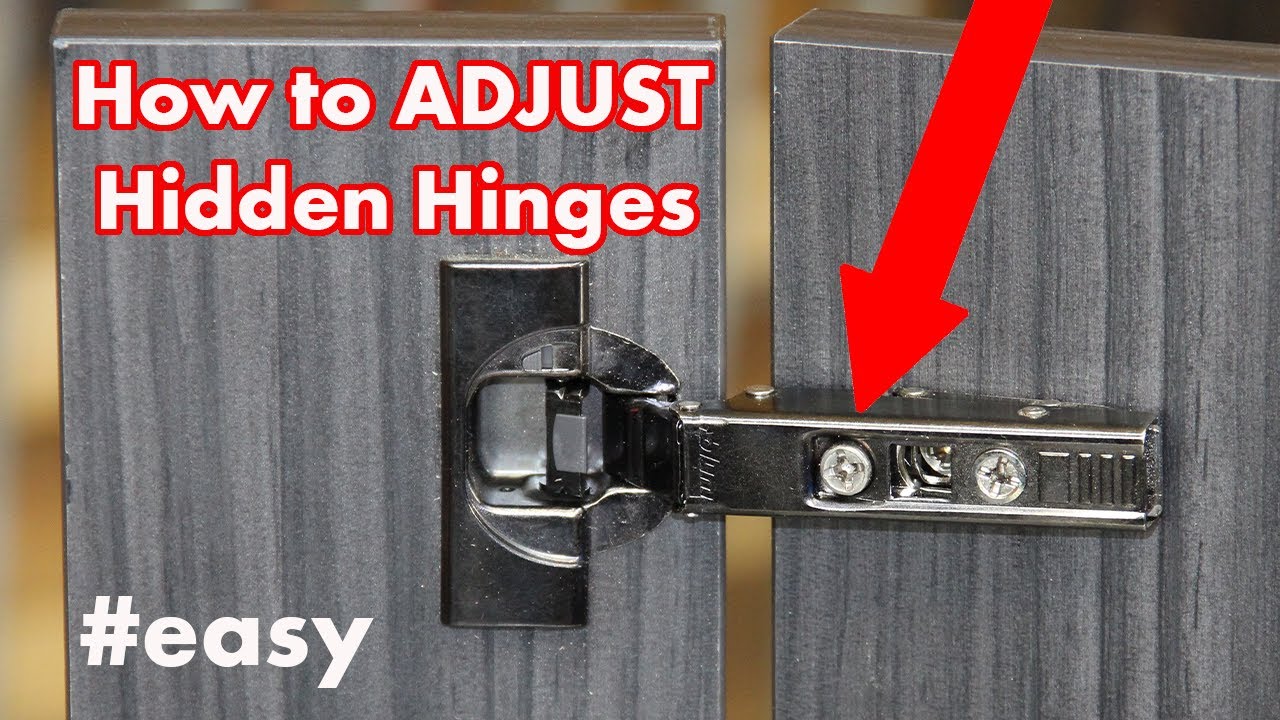
How To Identify The Adjustment Screws
Not all hinges look the same, but most adjustable hinges have three screws:
- The side-to-side screw (usually closest to the door edge)
- The depth screw (closer to the cabinet)
- The height screw (on the mounting plate inside the cabinet)
Manufacturers may arrange these differently, so look closely or check the manual. If you’re unsure, turn each screw a little while watching how the door moves.
Step-by-step: Adjusting Cabinet Hinges
Let’s break down the process for each type of adjustment. Each step should be done carefully, with small turns, to avoid over-adjusting.
1. Aligning Side-to-side (left/right)
If your cabinet door is too far left or right, causing uneven gaps or doors to overlap, you need a side-to-side adjustment.
- Open the door and locate the side-to-side screw.
- Turn clockwise to move the door toward the hinge (usually inward).
- Turn counterclockwise to move the door away from the hinge (outward).
- Make small adjustments, check the gap, and repeat as needed.
Non-obvious tip: Adjust both the top and bottom hinges to keep the door parallel to the cabinet frame. If you only adjust one hinge, the door may twist.
2. Adjusting Door Height (up/down)
When doors look crooked or don’t align across the top or bottom, height adjustment is needed.
- Find the height adjustment screw (usually on the mounting plate inside the cabinet).
- Loosen this screw slightly, but do not remove it.
- Move the door up or down to the desired position.
- Tighten the screw once the door is aligned.
Practical insight: It’s common to adjust the height after installing new hinges, as even a 1–2 mm shift can make a big visual difference.
3. Setting Depth (in/out)
If your cabinet door sticks out too far, doesn’t close flush, or scrapes the frame, adjust the depth.
- Locate the depth adjustment screw (often furthest from the door edge).
- Turn clockwise to move the door closer to the cabinet (inward).
- Turn counterclockwise to move the door outward.
Real-world example: If your door bounces open or feels “springy” when closing, the depth is probably set too shallow. Adjust inward until the door sits flat against the frame.
Comparing Hinge Types And Adjustments
Not all cabinets use the same hinges. Here’s a quick comparison of common types, their appearance, and how adjustable they are.
| Hinge Type | Visible? | Adjustment Directions | Where Used |
|---|---|---|---|
| European Concealed | No | Side, Height, Depth | Modern kitchens, bathrooms |
| Surface-Mounted | Yes | Usually none or limited | Older cabinets, decorative |
| Soft-Close | No | Side, Height, Depth | High-end, modern |
If your cabinet has older, non-adjustable hinges, you may need to loosen the entire hinge and reposition it, which is more involved.
Credit: www.youtube.com
Troubleshooting Common Problems
Even with careful adjustment, some problems can be tricky. Here’s how to handle the most common ones.
Doors Still Don’t Align
- Check if the cabinet box is square—sometimes walls or floors are uneven.
- Make sure both hinges are adjusted evenly.
- If the problem persists, the hinge itself may be bent or faulty.
Doors Won’t Stay Closed
- Check the depth setting—the door should sit flush with the cabinet.
- Inspect for warped doors (common in humid areas).
- Try tightening the mounting screws. Loose hinges can pop open.
Doors Rub Or Bind
- Adjust the side-to-side screws to even out gaps.
- Ensure nothing is stuck inside the cabinet.
- If the problem only happens with heavy doors, consider upgrading to soft-close hinges.
Hidden insight: Sometimes, adjusting the hinges reveals other problems, like stripped screw holes. If screws won’t tighten, fill the hole with a wood dowel or toothpicks and wood glue, then reinstall the screw.
Fine-tuning For A Perfect Finish
Getting the doors “good enough” is fine for many, but a professional look requires patience. Here’s how to take your results up a notch:
- Use a measuring tape to check gaps (2–4 mm between doors is standard).
- Step back and look at all doors in a row—small changes can make a big visual impact.
- Adjust doors in pairs for symmetry, especially on double-door cabinets.
- Wipe the hinges clean and check for dust or debris that might affect movement.
When To Replace Hinges Instead Of Adjusting
Sometimes, adjustment alone won’t solve your problems. Consider replacing your hinges if:
- The hinge is damaged or bent.
- Screws will not stay tight, even after repair.
- You want to upgrade to soft-close or higher-quality hardware.
Modern hinges are often standardized. Measure the cup diameter (usually 35 mm) and the screw spacing before buying replacements.
| Problem | Can Adjust Fix? | Should Replace? |
|---|---|---|
| Uneven doors | Yes | No |
| Loose screws | Sometimes | Maybe |
| Damaged hinge | No | Yes |
| Upgrade to soft-close | No | Yes |
Mistakes To Avoid
Many beginners make similar errors when adjusting cabinet hinges. Steer clear of these for the best results:
- Over-tightening screws, which can strip the wood or break the hinge.
- Ignoring the order of adjustments. Always fix height first, then side-to-side, then depth.
- Making large adjustments all at once. Small turns give better control.
- Failing to support the door when loosening height screws—doors can drop suddenly and damage the frame.
- Not checking doors in both open and closed positions. Sometimes, a door looks fine closed but binds when opened.
Care And Maintenance Tips
To keep your cabinet hinges working smoothly:
- Clean regularly with a dry cloth. Avoid harsh chemicals.
- Lubricate squeaky hinges with a drop of silicone spray.
- Check screws every 6–12 months, especially in high-use kitchens or bathrooms.
- Replace old or rusty hinges before they cause more problems.
Advanced tip: If you live in a humid area, monitor for swelling or warping of the cabinet doors, as this can affect hinge alignment over time.
Real-world Example: Kitchen Cabinet Adjustment
Imagine your kitchen cabinets start to look uneven after a few years. The right door on the pantry is higher than the left, and the doors meet with a big gap. Here’s how you’d fix it:
- Open the pantry and examine both hinges.
- Loosen the height adjustment screws and gently move the right door down to match the left.
- Tighten the screws and check the top and bottom lines for alignment.
- Use the side-to-side screws to reduce the gap between the doors.
- Adjust the depth screws if the door doesn’t close flush.
- Stand back and visually inspect. Repeat as needed for a seamless look.
After a few careful tweaks, your cabinets will look straight and new again.
Credit: hestiahearthdesign.com
Frequently Asked Questions
How Do I Know Which Screw To Turn On My Cabinet Hinge?
Most European-style hinges have three screws. The one nearest the door edge moves the door left and right. The screw on the mounting plate inside the cabinet adjusts the height. The furthest screw often sets the depth. If you’re unsure, turn each screw a quarter turn and watch how the door moves.
Can I Adjust Old Surface-mounted Hinges The Same Way?
Surface-mounted hinges usually don’t have built-in adjustments. You may need to loosen the screws, reposition the hinge by hand, and retighten. For more flexibility, consider upgrading to concealed adjustable hinges.
What If The Screws Are Stripped And Won’t Tighten?
Remove the screw, fill the hole with a wooden dowel or toothpicks and wood glue, let it dry, then reinstall the screw. This gives the screw new wood to grip. If the problem keeps happening, you may need a larger screw or a hinge with a different mounting pattern.
Why Do My Cabinet Doors Keep Popping Open?
This usually means the depth setting is off, so the door doesn’t sit flush. Try adjusting the depth screw to move the door closer to the cabinet. Also, check for warped doors, loose screws, or something blocking the closing path.
Where Can I Find More Information About Cabinet Hardware?
You can learn more about cabinet hinges and hardware from sources like the Wikipedia Cabinetry Page, which covers types, installation, and maintenance in detail.
Adjusting cabinet hinges is a simple but powerful way to improve your home’s look and function. With patience and the right steps, even a beginner can achieve a professional finish. Remember to make small adjustments, check your results from different angles, and don’t hesitate to upgrade your hardware if needed.
Your cabinets—and your home—will thank you.