Reverse Osmosis Water Filtration System Flow Diagram
Water is essential for life, but clean water is not always easy to find. Many homes and businesses rely on reverse osmosis water filtration systems to get safe, pure water. If you have ever wondered how these systems work, understanding the flow diagram can help you see the journey water takes from tap to glass. This article breaks down each stage of the process, explains the purpose of every component, and shows how everything fits together. Whether you are a homeowner, a student, or just curious about water treatment, you will find clear explanations, practical advice, and expert insights here.
What Is Reverse Osmosis?
Reverse osmosis (RO) is a water purification process that uses a special membrane to remove contaminants. The membrane is very thin and only allows water molecules to pass through. Impurities like salts, bacteria, and chemicals are blocked and flushed away. RO is commonly used for drinking water, aquariums, and even in industrial settings.
The process starts with pressurized water. It moves through several filters, each with a specific job. Only the cleanest water reaches the end. To understand how this happens, you need to look at the full flow diagram.
Main Stages Of an Ro Water Filtration System
An RO system is not just a single filter. It is a series of steps, each with a unique role. Here is a breakdown of the main stages found in most residential systems.
- Pre-filtration
- Reverse osmosis membrane
- Post-filtration
- Storage tank
- Delivery (Faucet or Output)
Let’s explore each stage in detail.
Pre-filtration
Before water reaches the RO membrane, it passes through one or more pre-filters. These filters remove bigger particles and protect the delicate membrane.
- Sediment filter: Removes dirt, sand, and rust. This is usually the first filter. It prevents clogging and increases membrane life.
- Carbon filter: Removes chlorine, bad taste, and odor. Chlorine can damage the RO membrane, so removing it is critical.
Most systems use both filters. Some advanced models add a third pre-filter for extra protection.
Reverse Osmosis Membrane
This is the heart of the system. The RO membrane is a thin sheet with tiny holes. Water is forced through it at high pressure. Only water molecules can pass. All other substances—like lead, fluoride, bacteria, and viruses—are blocked.
The membrane’s efficiency depends on quality and pressure. For example, a typical residential membrane removes up to 99% of dissolved solids. But low pressure or old membranes can reduce effectiveness.
Post-filtration
After the membrane, water passes through a post-filter. This is often another carbon filter. It polishes the water, removing any leftover taste or smell. This ensures the water is pleasant to drink.
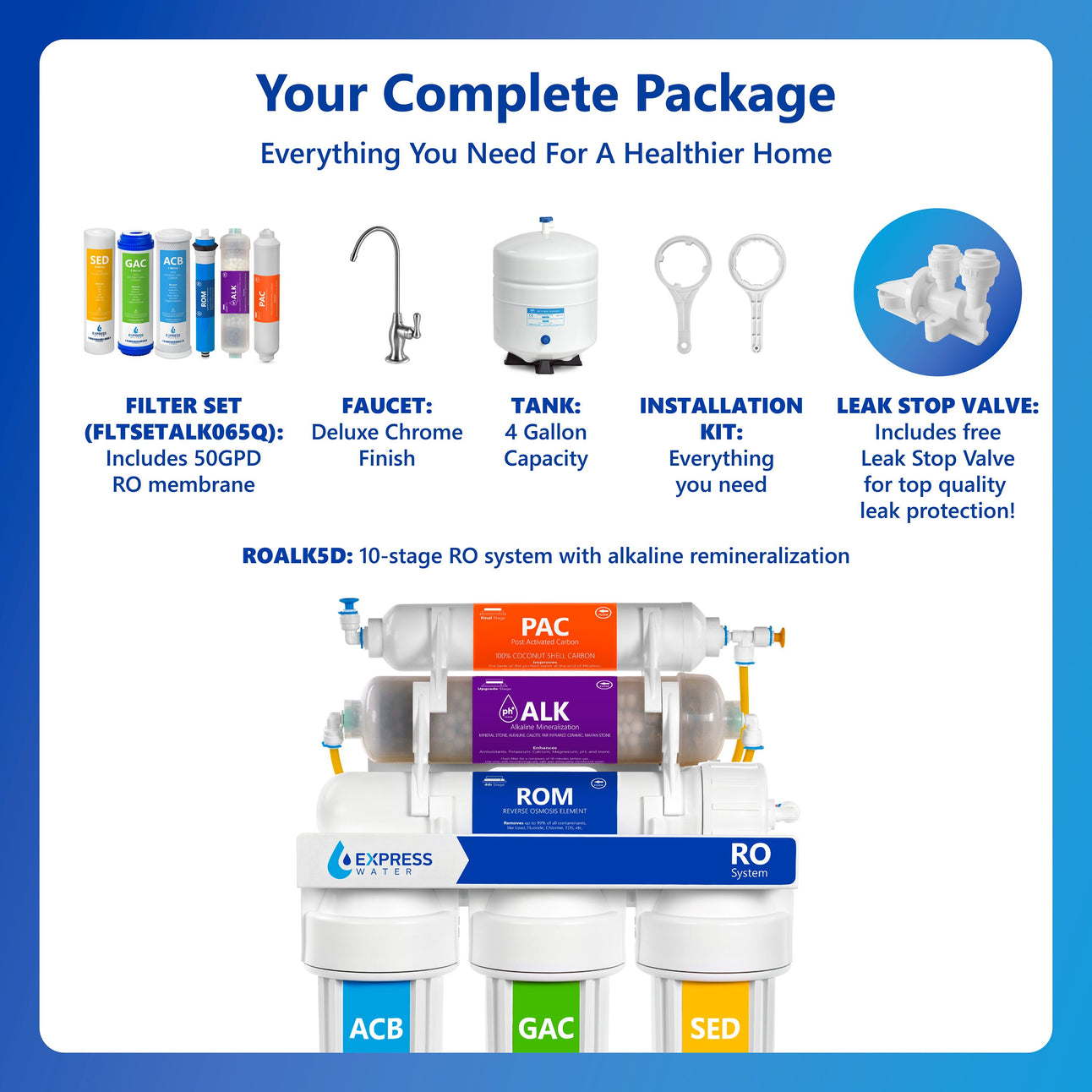
Some systems include extra stages, like re-mineralization filters. These add minerals back into the water, improving taste and health benefits.
Storage Tank
RO filtration is slow. To make sure you have water when you need it, most systems use a storage tank. Clean water is stored here until you open the faucet.
The tank has a bladder inside. It uses air pressure to push water out quickly. Tank sizes vary from 2 to 14 gallons, depending on household needs.
Delivery (faucet Or Output)
When you turn on the RO faucet, water flows from the storage tank through a final filter (if present) to your glass. Some systems connect to refrigerators, ice makers, or other appliances.

Credit: www.researchgate.net
Reverse Osmosis Flow Diagram Explained
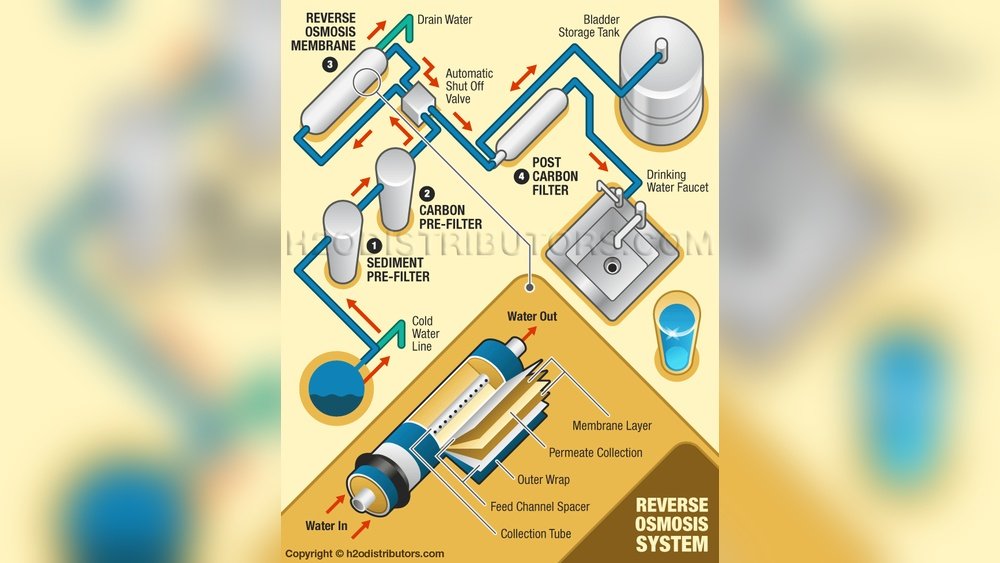
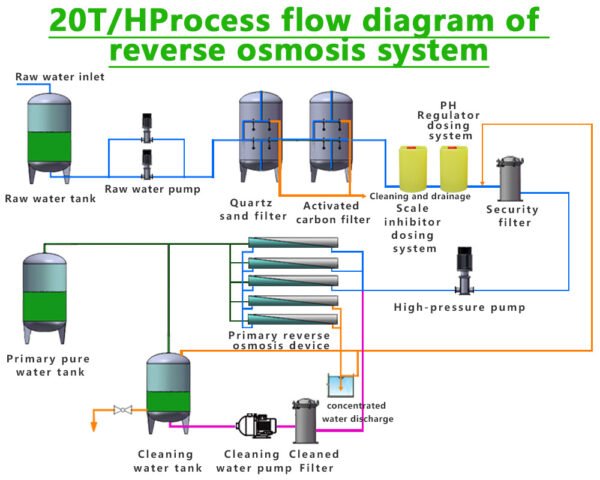
A flow diagram shows the path water takes through the RO system. Understanding this diagram helps you troubleshoot, maintain, and optimize your system.
Below is a simplified diagram of a typical 5-stage RO system:
Tap Water → Sediment Filter → Carbon Filter → RO Membrane → Storage Tank → Post-Filter → Faucet
Each arrow represents water moving from one component to the next. Let’s break down each step.
Detailed Flow Path
- Tap Water Input: Water enters the system from the main supply.
- Sediment Filter: Removes large particles.
- Carbon Filter: Removes chlorine and chemicals.
- RO Membrane: Removes dissolved solids and contaminants.
- Storage Tank: Stores purified water.
- Post-Filter: Final cleaning for taste and odor.
- Faucet: Delivers water to the user.
Some systems include extra filters, booster pumps, or pressure gauges. The basic path remains the same.
Component Comparison Table
To help you understand the differences between filters, here is a comparison of the main components:
| Component | Main Function | Common Material | Replacement Interval |
|---|---|---|---|
| Sediment Filter | Removes particles | Polypropylene | 6-12 months |
| Carbon Filter | Removes chlorine, odor | Activated carbon | 6-12 months |
| RO Membrane | Removes dissolved solids | Thin film composite | 2-3 years |
| Post-Filter | Improves taste | Activated carbon | 12 months |
| Storage Tank | Stores water | Metal/plastic | N/A |
Flow Rates And Water Efficiency
One of the most common questions about RO systems is how fast they work and how efficient they are. Here is a comparison of typical flow rates and rejection rates:
| System Type | Flow Rate (GPD) | Rejection Rate | Waste Water Ratio |
|---|---|---|---|
| Standard RO | 50 | 95-99% | 4:1 |
| High-Efficiency RO | 75 | 98-99% | 2:1 |
| Tankless RO | 400 | 98-99% | 1:1 |
- GPD stands for gallons per day.
- Waste water ratio shows how much water is rejected versus purified. Traditional systems waste more water, but newer models are more efficient.
Practical Insights And Tips
Understanding the flow diagram is useful, but practical tips help you use and maintain your system better.
- Change filters on schedule: Old filters reduce performance and can let contaminants through.
- Check water pressure: RO membranes need at least 40 psi. Low pressure means slow output and poor filtration.
- Flush the system regularly: This helps remove buildup and keeps the membrane clean.
- Monitor waste water: High waste means something is wrong—usually the membrane or flow restrictor.
- Choose the right tank size: Small tanks run out quickly, large tanks take up more space. Match your tank to your household needs.
Non-obvious insight: Many users overlook the importance of water temperature. Cold water slows down RO filtration. If your water is very cold, expect slower flow rates.
Another detail most beginners miss: system location matters. Installing your system in a hot, humid area can shorten filter life and cause mold issues. Always install in a cool, dry place.
Credit: chunkewatertreatment.com
Common Problems And Troubleshooting
Even the best RO system can have problems. Here are some frequent issues and solutions.
- Low water flow: Usually caused by clogged filters or low pressure.
- Bad taste or odor: Post-filter needs replacing, or membrane is worn out.
- Leaking: Check fittings, tubing, and tank for cracks or loose connections.
- High waste water: Flow restrictor may be faulty, or membrane is failing.
- No water output: Tank is empty, valve is closed, or filters are fully blocked.
If troubleshooting does not fix the problem, consult your system’s manual or a professional.
Ro System Flow Diagram Vs. Other Filtration Methods
How does RO compare to other filtration systems? Here is a quick comparison:
| Method | Contaminant Removal | Water Taste | Maintenance |
|---|---|---|---|
| Reverse Osmosis | 99% (most contaminants) | Very pure, can be flat | Medium (multiple filters) |
| Activated Carbon | Chlorine, organic chemicals | Improved taste | Low (single filter) |
| UV Filtration | Bacteria, viruses | No change | Low (lamp replacement) |
| Distillation | 99% (almost all) | Very pure, flat | High (slow, energy use) |
RO systems offer the best overall contaminant removal, but require more maintenance and may produce water with less flavor unless minerals are added back.
Real-world Example
Imagine you live in an area with hard water and possible contamination. Installing an RO system, you see water enter the sediment filter, then the carbon filter, and finally the membrane. After filtration, water is stored in a tank. When you turn on the faucet, clean water flows out, and you notice the difference in taste and quality immediately. Over the months, you change filters as needed and monitor flow rates to ensure optimal performance.
Advanced Features In Modern Ro Systems
Many new RO systems offer tankless designs and smart monitoring. Tankless systems provide faster flow rates and waste less water. Some models include digital sensors that track filter life, water quality, and usage. This helps you maintain your system and avoid unexpected failures.
If you want to learn more about advanced RO technology, check this resource: Wikipedia – Reverse Osmosis.
Frequently Asked Questions
What Contaminants Does An Ro System Remove?
RO systems remove dissolved solids, heavy metals, bacteria, viruses, pesticides, and many chemicals. The exact removal depends on membrane quality and system design. Most residential systems achieve up to 99% removal.
How Often Should I Replace The Filters?
Replace the sediment and carbon filters every 6–12 months. The RO membrane lasts 2–3 years, and the post-filter should be changed yearly. Always check your system manual for specific intervals.
Why Is There Waste Water In Ro Systems?
RO membranes reject impurities, which are flushed away as waste water. Traditional systems waste about four gallons for every gallon purified. Modern systems waste less, sometimes just one gallon per gallon purified.
Can Ro Water Be Used For Cooking And Drinking?
Yes, RO water is ideal for cooking and drinking. It is free from contaminants and safe for most uses. Some people prefer to add minerals back for better taste and health.
Is Installation Difficult?
Most residential RO systems are designed for easy installation. Basic plumbing skills are helpful. If you are unsure, professional installation is recommended.
Final Thoughts
A reverse osmosis water filtration system flow diagram shows more than just lines and arrows—it reveals the journey water takes from source to your glass. By understanding each stage, you can choose the right system, maintain it correctly, and enjoy the benefits of pure, safe water every day. Whether you are upgrading your home, managing an office, or simply learning, these insights will help you make confident decisions about water quality. Remember to check filter schedules, pay attention to water pressure, and always use a reliable, well-designed system. Clean water is worth the effort.
Credit: www.expresswater.com